Images are illustrative and do not replace reliable identification. For an individual case, you need photographs of the animal, its origin, documentation and confirmation from an expert or the relevant authorities.
The essential answer
What does ‘aquatic turtle’ really mean?
‘Aquatic turtle’ is a common term, not a species. It describes turtles that spend a substantial part of their lives in water, but can differ profoundly in geographic origin, swimming style, diet, use of dry land, adult size and legal protection.
They belong to the order Testudines, the group of reptiles characterised by a carapace and plastron. Within this order, families and genera have developed different adaptations: some species swim in open water and frequently climb out to bask; others walk along the bottom, seek shelter among roots and vegetation or alternate between water and land. A generic profile is therefore not enough to design a habitat.
Scientific name
The genus and species, for example Trachemys scripta, link the animal to verifiable information. A commercial name may be incomplete or ambiguous.
Morphology
The head, carapace profile, plastron, feet, tail and skin markings offer clues. Colour and size alone can change with age, sex and living conditions.
Ecology
Body shape also reflects how the animal lives: swimming, basking, foraging and use of the bottom guide choices about depth, furnishings and diet.
Responsible identification
An initial assessment should be confirmed with several photographs, measurements and origin information. Legal obligations or health concerns require qualified verification.
An overview
Families, body shapes and different ways of living in water
Grouping species by family helps explain major evolutionary differences, but does not replace individual species profiles. The following guidance describes general tendencies: exceptions and individual variation exist.
| Group | Examples | Useful characteristics | Implications for care |
|---|---|---|---|
| Emydidae | Trachemys, Graptemys, Chrysemys, Emys | Many are strong swimmers and regularly use dry surfaces to warm up. | Swimming space, a stable basking area, UVB and identifying legal status are central. |
| Kinosternidae | Sternotherus, Kinosternon | Often more closely associated with the bottom, shelters and structured routes than continuous swimming in open water. | Footholds and suitable depth are needed; small size does not mean a minimal tank. |
| Chelidae | Chelodina, Emydura | Side-necked turtles with ecologies and native climates different from common North American species. | Temperature, diet and environmental structure must be researched for each species rather than copied from standard setups. |
| Pelomedusidae | Pelomedusa | African side-necked species associated with particular environmental and seasonal conditions. | Temperature management and the balance between water, shelter and dry areas need particular attention. |
| Trionychidae | Apalone | Flexible carapace, exposed skin and strong specialisation for aquatic life. | Water quality, a non-abrasive substrate, space and the absence of sharp furnishings become crucial. |
- Carapace
- The upper part of the shell. Shape, edges and markings are useful, but may change as the animal grows.
- Plastron
- The underside of the shell. Photographing it without keeping the animal upside down for long can provide important identification clues.
- Basking
- Leaving the water to absorb heat and light. Frequency and behaviour vary between species and individuals.
- Sexual dimorphism
- Differences between males and females, often visible only after some growth and not the same in every group.
A journey from Italy to the waters of the world
We begin with native Italian species and neighbouring European countries, then widen our view to other continents. This is a geographical route to help you find your bearings, not a ranking by distance: some species span several regions.
Green shows indicative native ranges, not every place where turtles can be found today. Introduced populations are excluded, and simplified boundaries do not indicate continuous occurrence. Tap the maps to enlarge them.
Europe: beginning with our own waters
From Italy to neighbouring countries and the Caucasian–Caspian fringe: five profiles introducing the turtles of our wetlands and nearby regions. Only the first two are presented here as native to Italy.
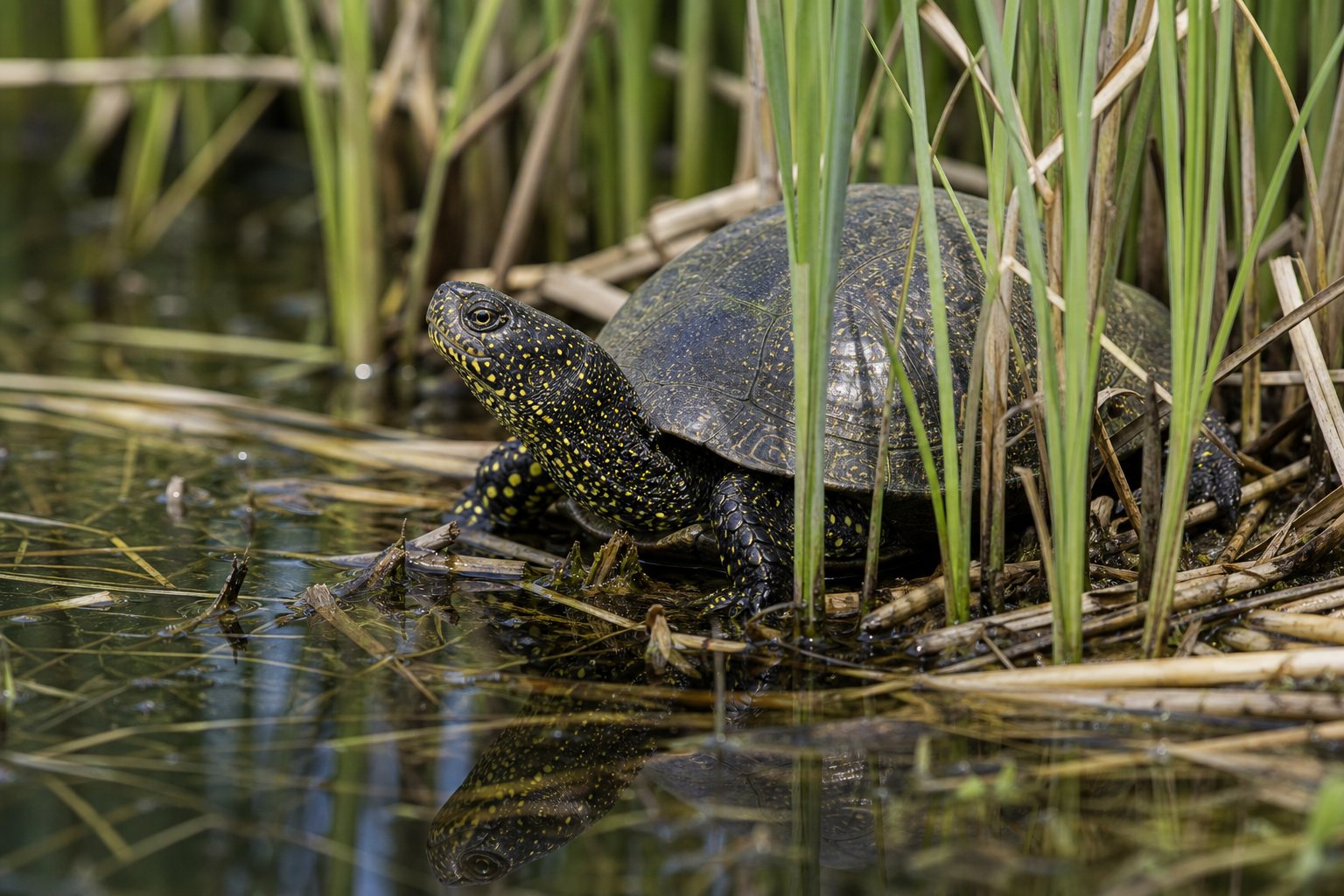
Emys orbicularis
European pond turtle.
Close to home: understand and protect
Emys orbicularis, the European pond turtle, is important to our natural heritage. If you encounter a turtle in a natural setting, do not assume it has been ‘abandoned’ and do not move it without qualified guidance.
In these situations, the line between helping and harming can be thin: a photograph, the location and a properly directed report may be more useful than an improvised rescue.
Observe a native species with respect; do not collect it out of curiosity. In Sicily, the local form is presented here in the separate profile for Emys trinacris.
Where it lives in the wild


Central, southern and eastern Europe, north-western Africa and part of western Asia as far as the Caspian region.
The range is fragmented. Sicily’s distinct native species is Emys trinacris: the island is not included in the green area on this map.
Sources: The Reptile Database.
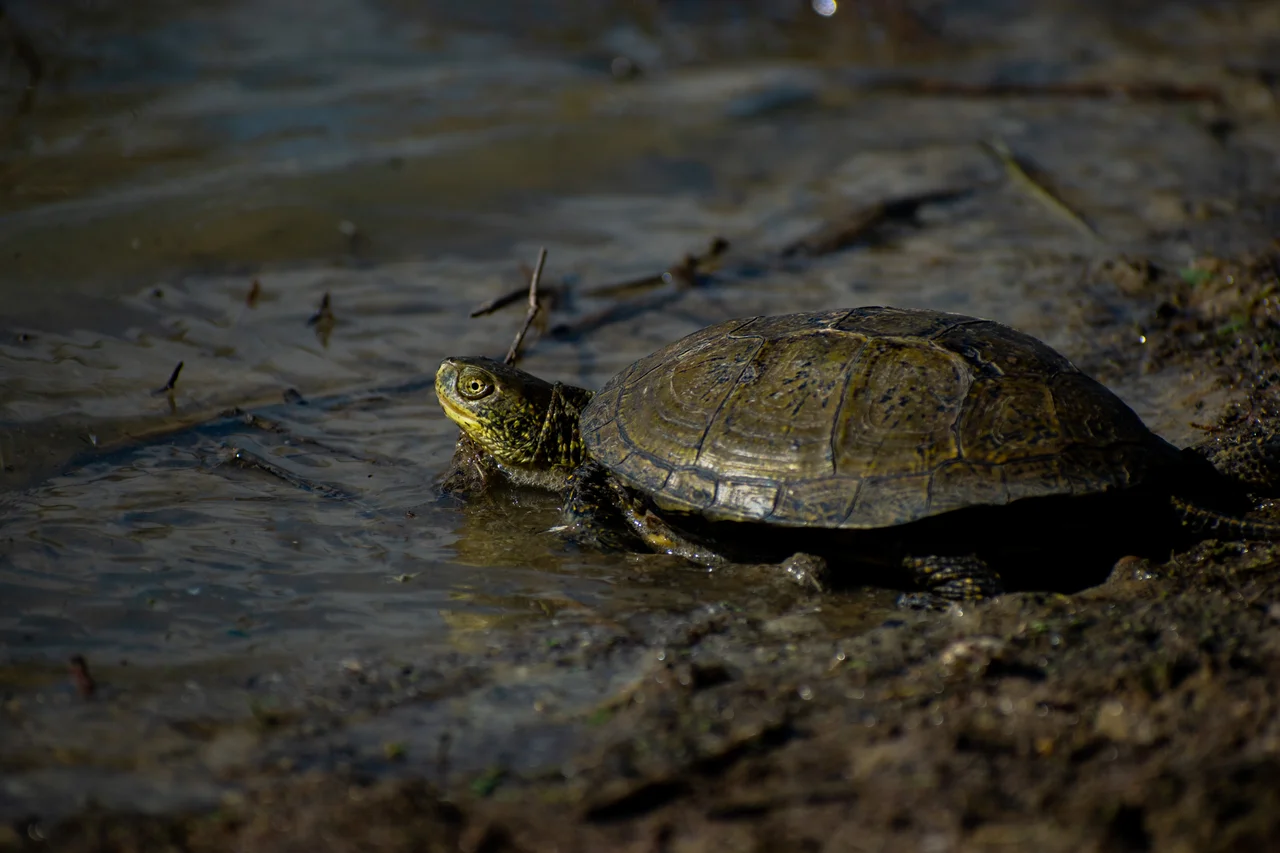
Photo: Taxiarchis Danelis · CC BY 4.0. Resized and converted to WebP, with no retouching.
Emys trinacris
Sicilian pond turtle.
A small but important part of Italy’s biodiversity: this Emys tells the story of Sicily’s connection with its inland waters. Getting to know it means learning to value even an apparently unremarkable pond.
How to recognise it
Its dark carapace and pale speckles resemble E. orbicularis. The similarity is strong: a photograph or colour alone is not enough to tell them apart with certainty.
Habitat and daily life
It lives in freshwater habitats, including ponds, marshes and watercourses. Water, banks and vegetation form a single environment: protecting the water surface alone is not enough.
Our perspective
Watching without collecting is the first act of respect. Being in Sicily does not make every turtle found on the island automatically identifiable: introduced animals may also occur. For an animal in distress, consult the found-turtle guide.
Where it lives in the wild


Italy: Sicily. A pond turtle native to the island and associated with its wetlands.
Green identifies Sicily as the area of origin, not presence throughout the island. We follow TTWG 2025 in treating Emys trinacris as a species; other checklists treat it as a subspecies of E. orbicularis.
Sources: The Reptile Database.
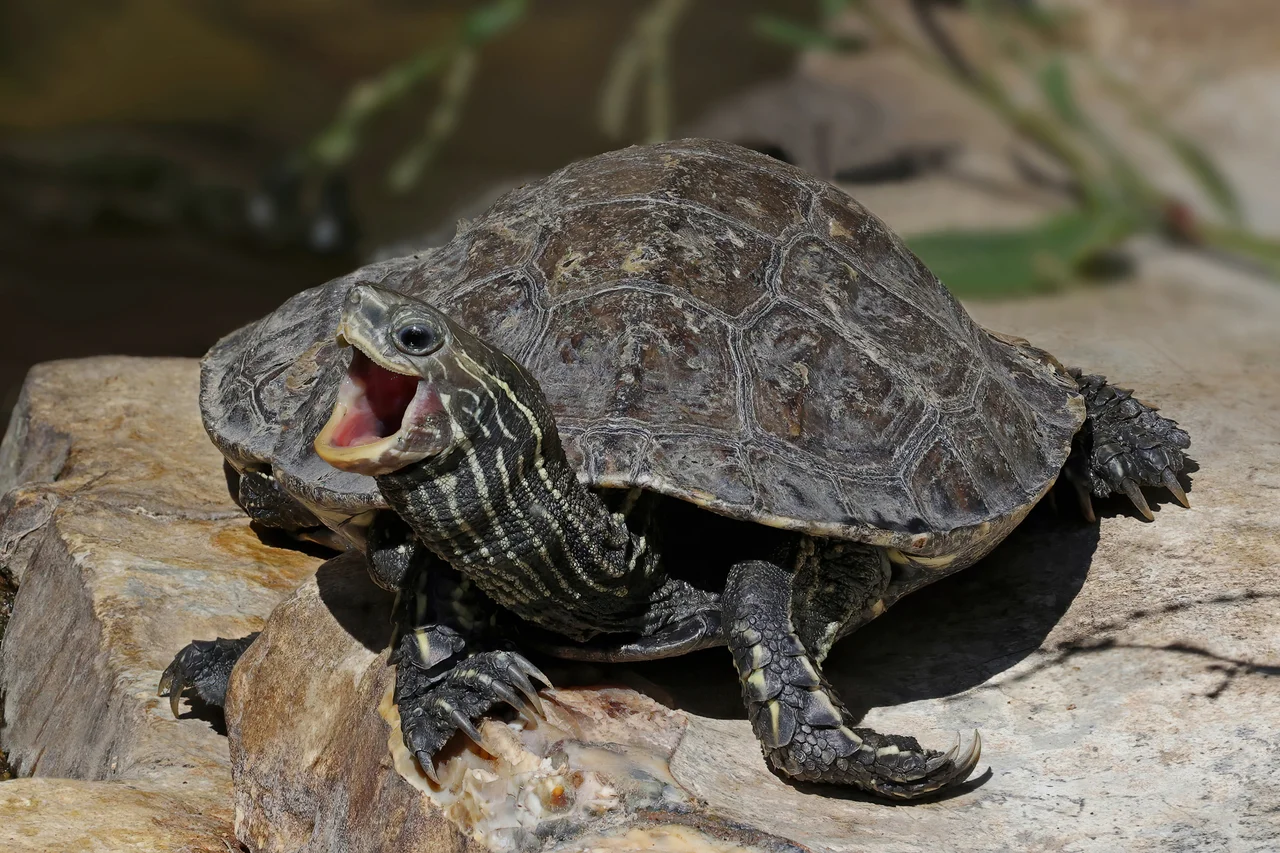
Photo: Charles J. Sharp · CC BY-SA 4.0. Resized and converted to WebP, with no retouching.
Mauremys rivulata
Balkan pond turtle.
Just across the Adriatic, another freshwater story begins. M. rivulata inhabits the eastern Mediterranean landscape: it is not an exotic version of Emys, but a species with an identity of its own.
How to recognise it
Pale lines along the neck and head are a useful clue, not conclusive proof: other Mauremys can look similar. The scientific name and origin help avoid confusion.
Habitat and behaviour
It occurs in rivers, lakes, ponds — including seasonal ones — and canals; it may also use brackish coastal lagoons. This variety does not mean that any tank or water quality will suit it.
What needs protecting
Wetland loss and degradation can isolate or eliminate local populations, particularly those at range margins or on islands. Protecting habitats and preventing introductions of other turtles matters more than moving animals from place to place.
Where it lives in the wild


South-eastern Europe: the Balkans and Greece, extending into Turkey and the eastern Mediterranean.
Island and mainland occurrences are fragmented. It is not native to Italy and should not be confused with Mauremys caspica, from which it is now distinguished.
Sources: IUCN TFTSG — monograph · The Reptile Database.

Photo: David Perez (DPC) · CC BY-SA 3.0. Resized and converted to WebP, with no retouching.
Mauremys leprosa
Iberian pond turtle.
Between the Iberian Peninsula and North Africa, this turtle links the two sides of the Mediterranean. Its scientific name is not a diagnosis: it does not mean the animal has leprosy.
How to recognise it
The shell tends to be brown or olive, with pale stripes on the neck. Appearance and markings change with age, so do not rely on one detail alone to identify it.
Habitat and feeding
It lives in inland waters and is notably adaptable. It eats both animal and plant foods: its natural diet is more complex than a single feed or dried shrimp alone.
An important distinction
Being able to survive in degraded water does not mean thriving there. Its resilience does not justify dirty water or poor environments. In Italy, it should not be regarded as native or released into the wild: geographic proximity does not make animal communities interchangeable.
Where it lives in the wild


South-western Europe: Portugal, Spain and populations in southern France. The range continues into North Africa.
The map summarises the core Iberian and Maghreb range. Introductions, such as on Mallorca, and Saharan populations of debated origin are not shown as confirmed native range.
Sources: IUCN TFTSG — monograph · The Reptile Database.
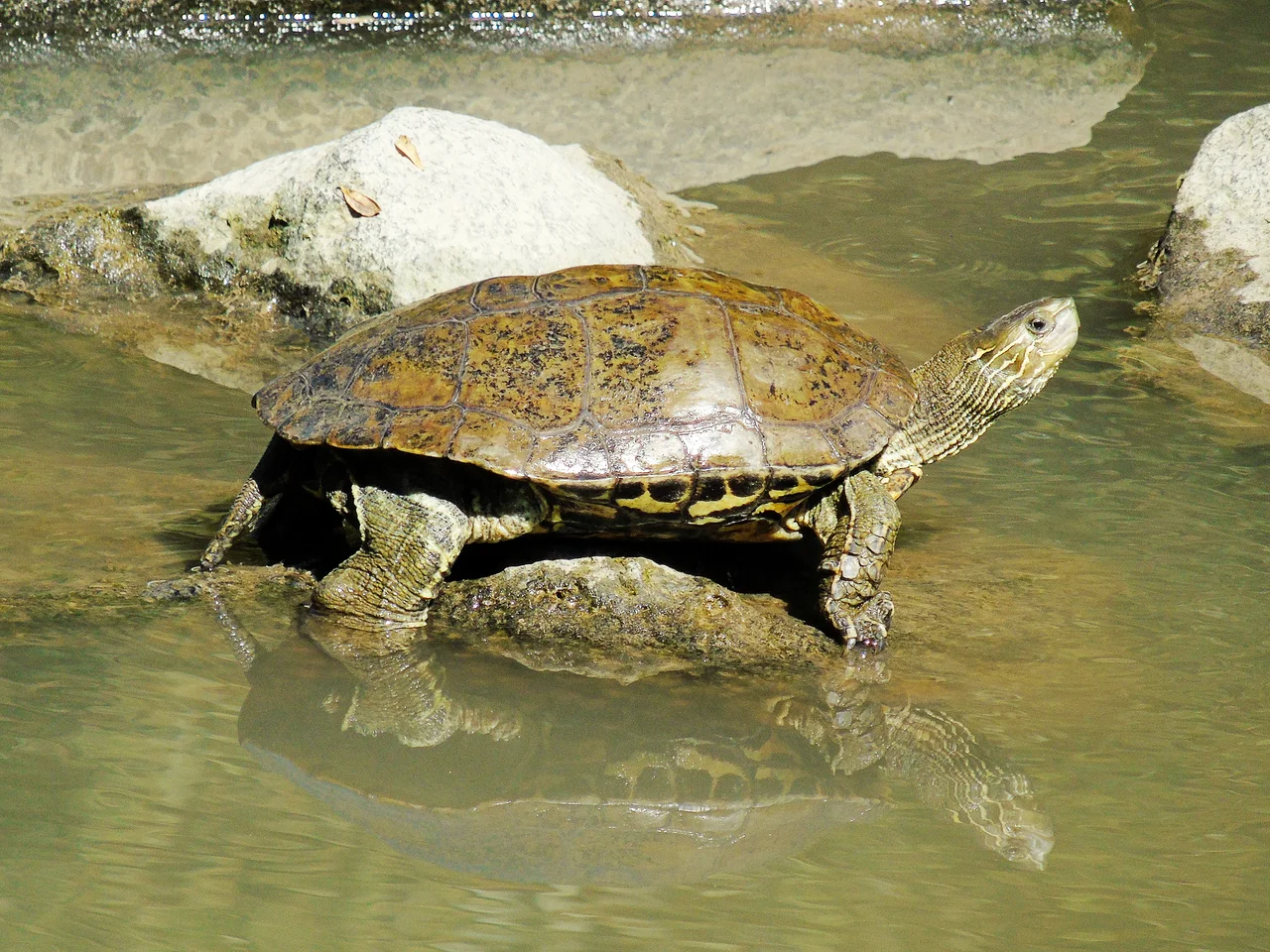
Photo: Kseniia Marianna Prondzynska · CC BY 4.0. Resized and converted to WebP, with no retouching.
Mauremys caspica
Caspian pond turtle.
Our European journey reaches the Caucasian–Caspian fringe. Its presence in Dagestan connects it to southern Russia, but much of its natural history belongs to western Asia.
How to recognise it
Its striped neck and head may resemble M. rivulata. They are distinct species: in older texts, the same name may refer to animals classified differently today.
Habitat and feeding
It uses watercourses, ponds, lakes and canals. It is omnivorous: the balance of animal and plant foods changes with age and environment. Observations in the wild should not be turned into an improvised captive diet.
Seasons and responsibility
Populations live in different climates and do not all follow the same seasonal rhythm. There is therefore no single hibernation rule for every individual. For an animal already in captivity, origin and veterinary assessment must come before any decision; never release it into the environment.
Where it lives in the wild


The Caucasian–Caspian fringe, including Dagestan in southern Russia, and western Asia: Anatolia, Mesopotamia and Iran, with further populations to the south.
It links the European and Asian parts of our journey; it is not a turtle widespread in western Europe. Older Balkan records may refer to the distinct M. rivulata.
Sources: IUCN TFTSG — 2024 monograph · The Reptile Database.
Africa
A continent close to the Mediterranean, yet with very different environments and species. North African Mauremys are already covered in the Mediterranean profiles.
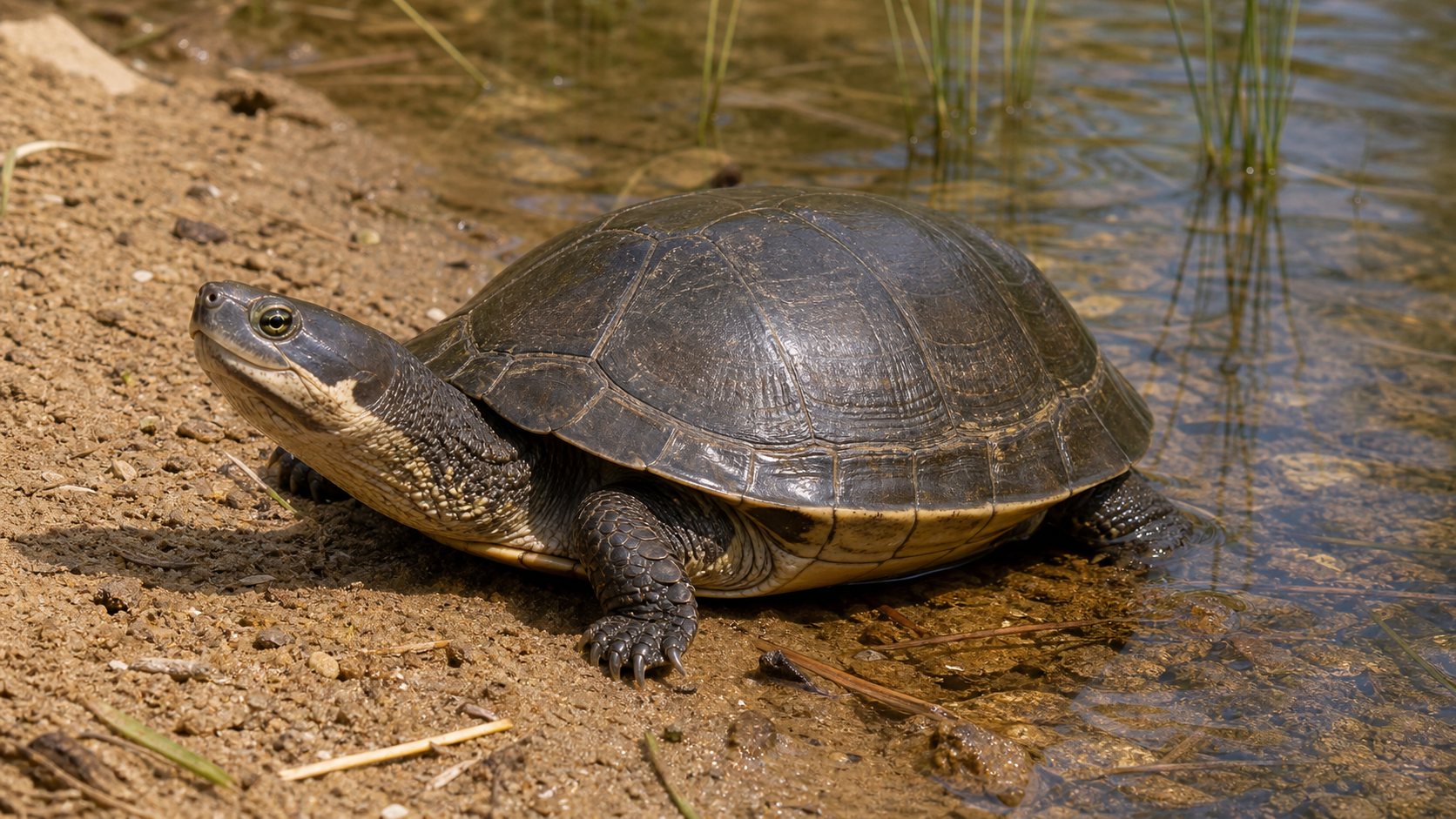
Pelomedusa subrufa
An African turtle with a different profile and different needs from North American species.
In simple terms
A perfect example of why there is no single ‘aquatic turtle’: copying a North American species’ setup can be a serious mistake.
Legal note
Check documentation, origin and applicable legislation. A less discussed species is no reason for an impulse purchase.
Care
Needs species-appropriate temperature, depth, a dry area, shelters and diet. Research is essential before it arrives.
Where it lives in the wild


South-central and eastern Africa, with documented populations across Angola, Namibia, Botswana, north-eastern South Africa, Malawi, DR Congo and Tanzania.
Pelomedusa now comprises several species. The map summarises populations assigned to P. subrufa, not the former range covering almost all of Africa; gaps in knowledge remain.
Sources: The Reptile Database · SANBI.
Read more
Pelomedusa subrufa comes from a different ecological setting from the most commonly kept North American turtles. Temperature, depth, the dry area, behaviour and diet should therefore not be copied automatically from generic aquatic turtle profiles.
A common mistake is assuming that all species need deep water and identical basking conditions. In reality, the setup must respect how the species moves, rests, feeds and regulates its temperature. Thermal stability and the ability to leave the water safely are particularly important.
Before buying, consider whether you can maintain appropriate conditions all year round. Adjusting care only after the animal arrives often causes avoidable stress and problems.
Asia
From the waters of China and Korea to the island groups of South-east Asia: different origins call for different questions.
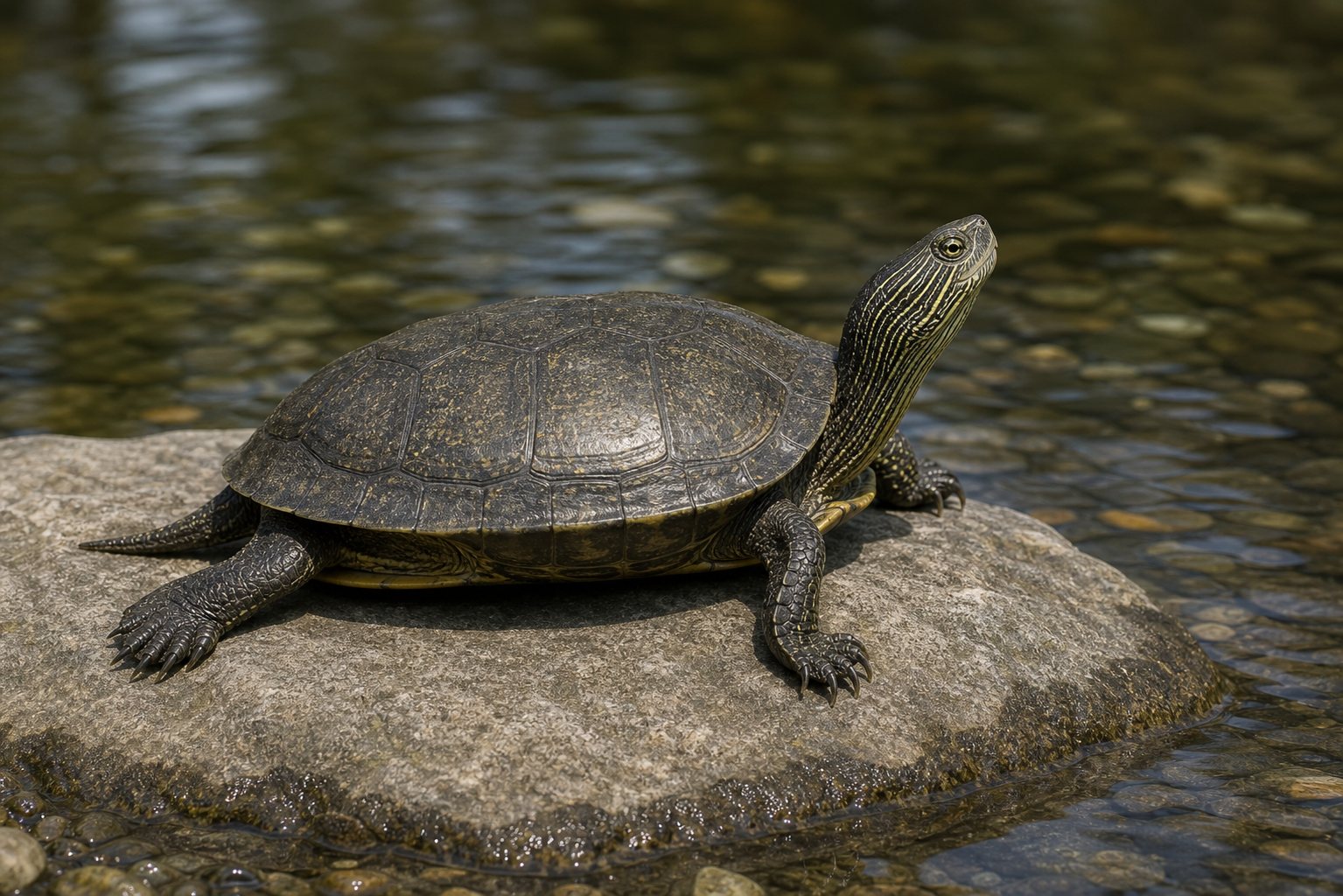
Mauremys reevesii
A striped-neck turtle found in research and the pet trade.
In simple terms
Often seen as a more manageable choice than Trachemys, but still a long-lived, demanding turtle that must be identified correctly.
Legal note
Being available for sale does not remove responsibility: check origin, documentation and current rules.
Care
Needs a well-filtered tank, a basking area, UVB, warmth, a varied diet and care over cold conditions, cohabitation and bare environments.
Where it lives in the wild


Central and eastern China and the Korean Peninsula: an Asian origin associated with freshwater habitats.
Japanese populations are considered introduced by the genetic research cited in the source; Japan is not coloured as part of the native range.
Sources: The Reptile Database.
Read more
Mauremys reevesii needs balanced care: clean water, an effective basking area, UVB exposure, appropriate temperature and a varied diet. It should not be seen as an easier alternative to better-known species: even a smaller or less discussed animal lives for years and needs consistent care.
Identification matters because commercial names, hybrids and similar species can cause confusion. Before planning housing, feeding and legal checks, you need reasonable certainty about which animal you have.
Good care avoids barren setups: shelters, footholds, places to dry off and opportunities to explore reduce stress and improve quality of life.
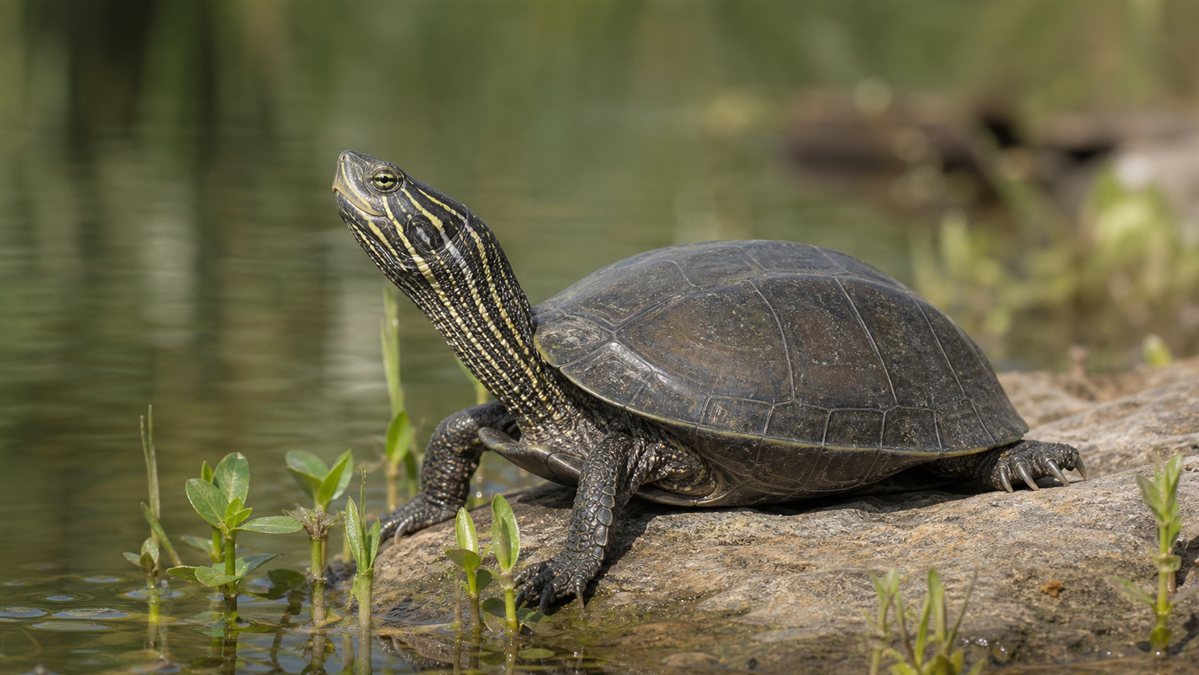
Mauremys sinensis
Chinese stripe-necked turtle, often confused with other species or sold under different names.
In simple terms
The name used in a shop is not enough: similar species and hybrids can cause confusion over care and documentation.
Legal note
Check documents, origin and the scientific name before buying or taking one in.
Care
A filtered tank, basking area, UVB, suitable temperature and varied diet, without copying generic profiles.
Where it lives in the wild


Southern and eastern China, Taiwan and part of northern Indochina, particularly Vietnam and Laos.
Populations introduced elsewhere, such as in Korea, are not part of the native range shown here.
Sources: The Reptile Database.
Read more
Mauremys sinensis first requires reliable identification. Trade names may be imprecise, and related species or hybrids can undermine overly generic advice.
Care must be based on stable water conditions, basking, UVB light and an appropriate diet. The ethical question remains central: can you provide a long, well-supported life for the animal, or are you simply responding to an impulse to buy?
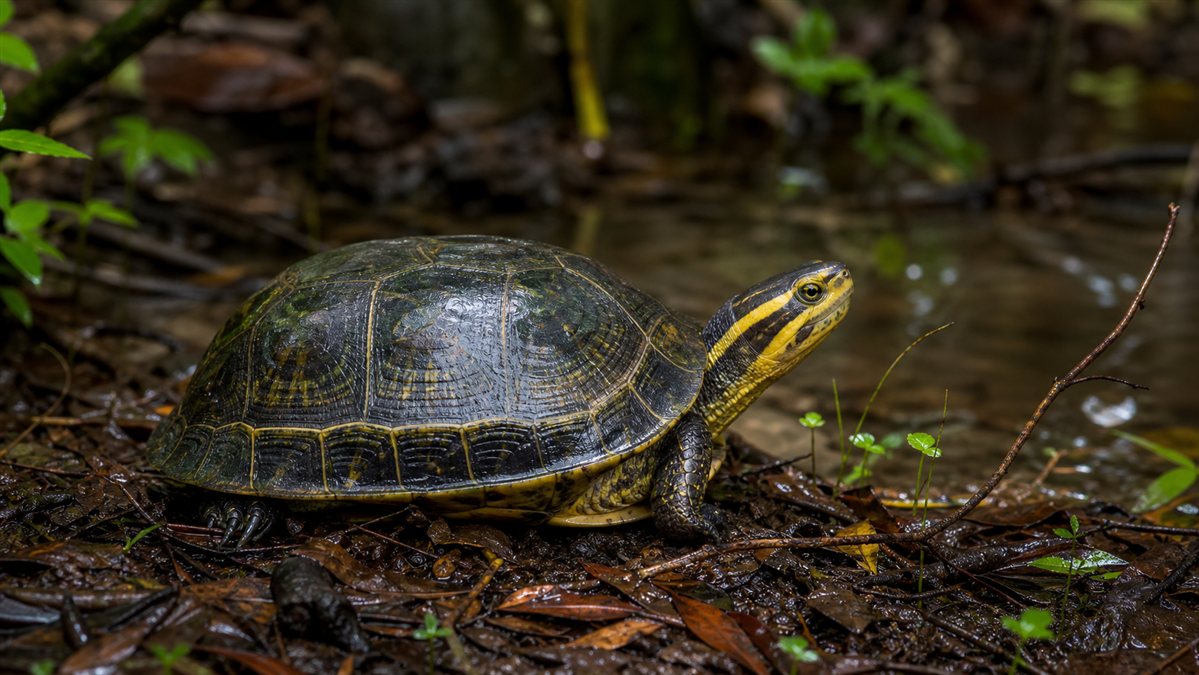
Cuora amboinensis
A South-east Asian box turtle, semi-aquatic and often mistaken for a typical aquatic species.
In simple terms
Not a ‘standard’ aquatic turtle: it needs carefully planned aquatic and terrestrial areas.
Legal note
Documentation, origin and CITES or equivalent requirements must be checked before any decision.
Care
A semi-aquatic environment, shelters, humidity, clean water and a varied diet require knowledge and skill.
Where it lives in the wild


Island South-east Asia: parts of Indonesia, Borneo and the Philippines, following the current taxonomic delimitation used by the source.
Older maps also included mainland populations now assigned to other species. The commercial name alone does not clarify this distinction.
Sources: The Reptile Database.
Read more
Cuora amboinensis shows the limits of overly simple categories: calling it an ‘aquatic turtle’ is not enough. A functional land area, refuges, humidity, accessible water and appropriate temperature form an integrated whole.
Many Asian species have historically been affected by problematic trade: origin, documentation and legality are therefore part of protecting the animal, not secondary bureaucracy.
North America
This is the native home of many turtles also encountered in Europe following human introductions. Finding them in an Italian pond does not make them native species.
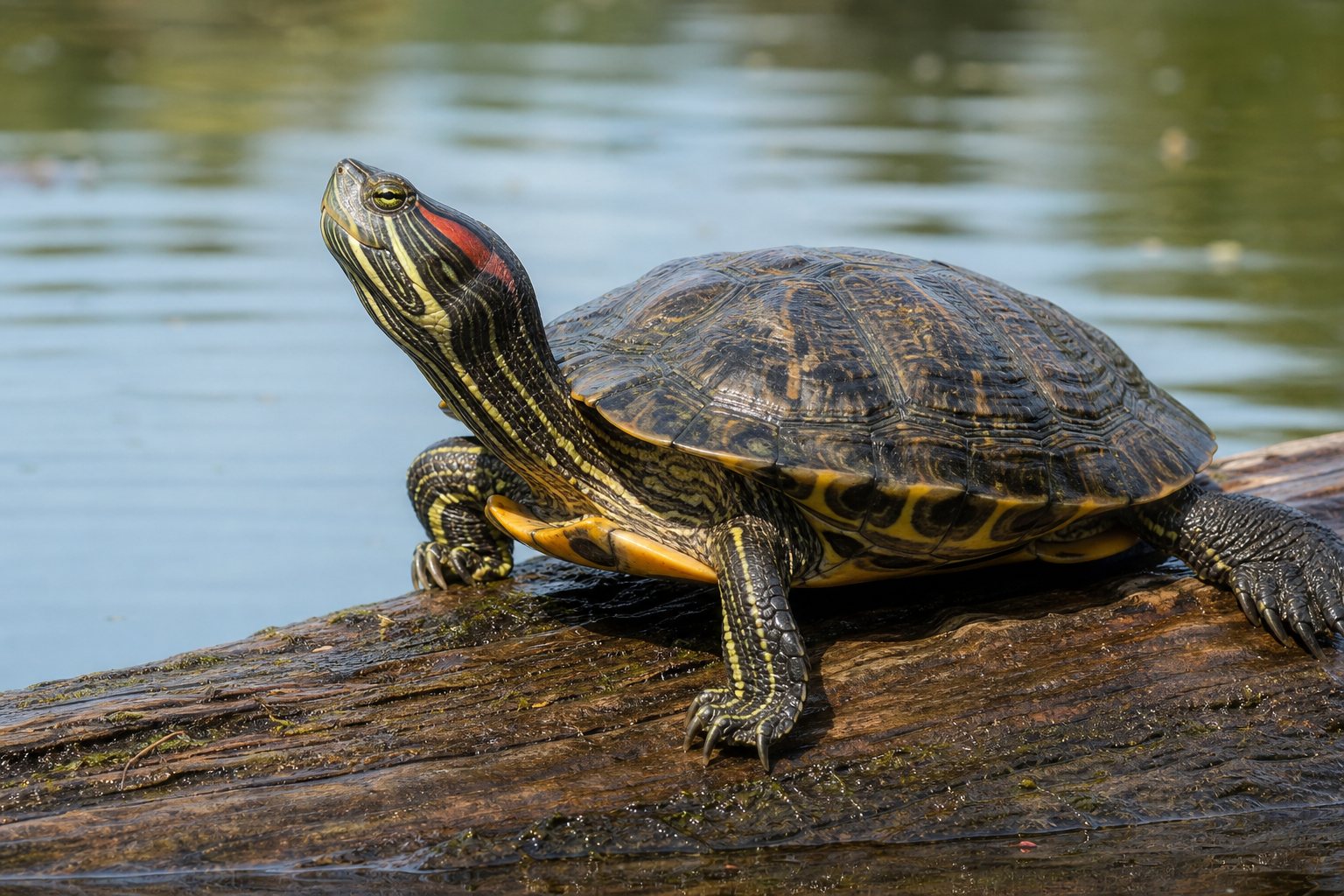
Trachemys scripta
American pond slider, including forms with red or yellow ‘ear’ markings.
In simple terms
The turtle that epitomises impulse buying: small, lively and apparently easy. Then it grows, lives for many years, produces a substantial waste load and becomes a serious commitment.
Legal note
An invasive alien species of Union concern: legislation, documents and official guidance must be checked before any decision.
Care
Needs space for its adult size, powerful filtration, proper basking, UVB, a suitable diet and strict prevention of escape, reproduction and release.
Where it lives in the wild


North America: the central and south-eastern United States, extending to north-eastern Mexico.
The three subspecies occupy different areas. Numerous introduced populations, including those in Italy, are not shown in green.
Sources: The Reptile Database.
Read more
The main challenge with Trachemys scripta is not just size, but the combination of longevity, physical strength, rapid growth, appetite and environmental impact. An animal bought when only a few centimetres long can become a robust turtle that is difficult to contain in makeshift home setups.
Care requires ample water with stable conditions, a filter rated well above that for a fish aquarium, a completely dry basking area, a UVB lamp, a controlled heat source and protection against escape or falls. Diet changes with age and species: many adults need a substantial plant component, while a consistently high-protein diet easily leads to mistakes.
The legal situation is sensitive: trade, breeding, release and movement must be checked against official sources. It must not be transferred informally or ever released into ponds, parks or watercourses.
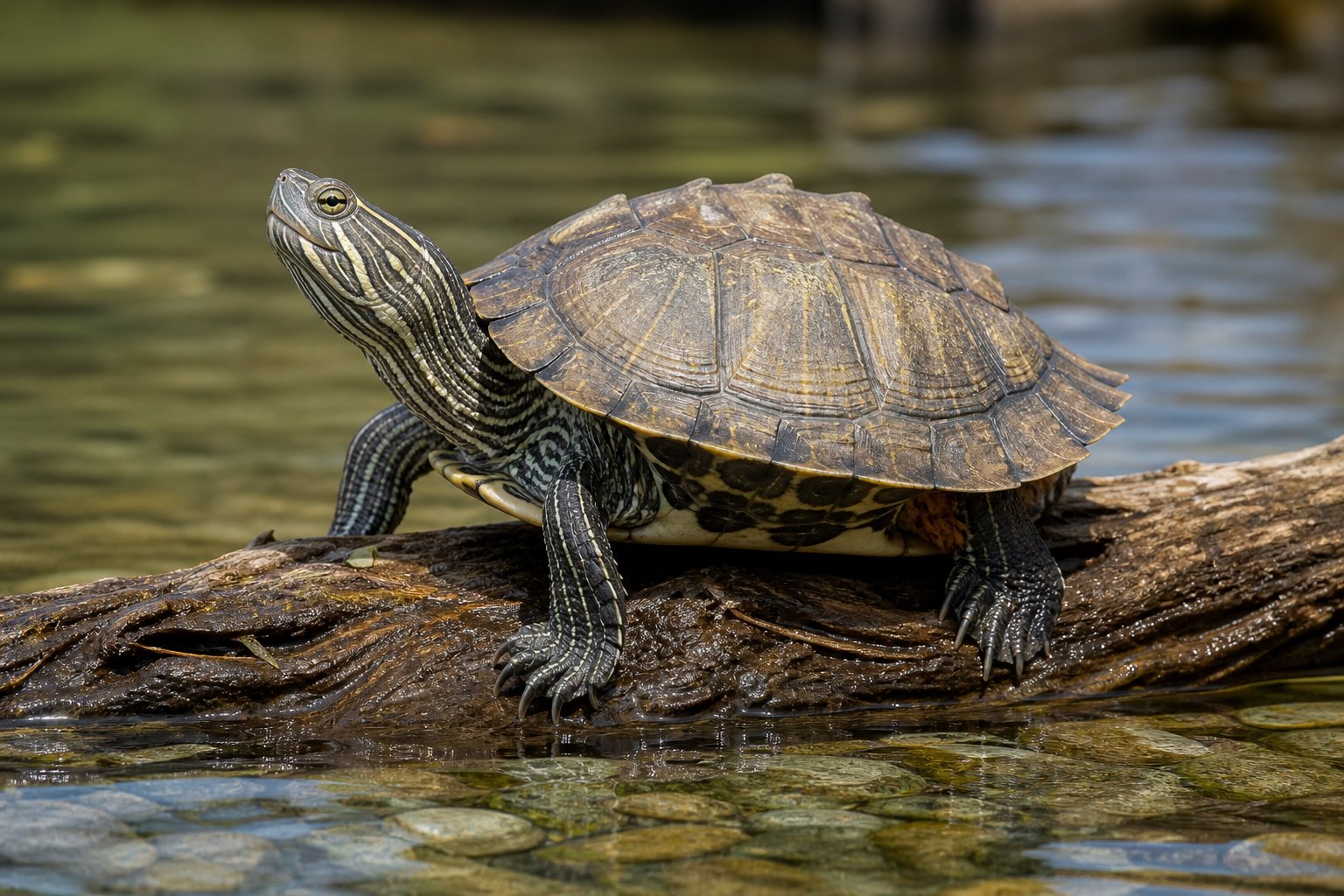
Graptemys spp.
Map turtles, often with a more ridged carapace and fine markings.
In simple terms
Their elegant appearance often attracts people looking for a less ‘common’ turtle, but they are sensitive to water quality and superficial care.
Legal note
The genus includes several species: identification, origin and documentation must be checked before buying, transferring or moving one.
Care
Clean water, suitable depth, an effective basking area, UVB and a carefully balanced diet are central. Cohabitation and small tanks can cause stress.
Where it lives in the wild


Rivers and drainage basins of the central and eastern United States; the genus extends into southern Canada.
This is an overview map of the genus: some species live in just a few river basins, not throughout the highlighted area.
Sources: The Reptile Database (1) · The Reptile Database (2) · The Reptile Database (3).
Read more
Members of the genus Graptemys are often called ‘map turtles’ because of the fine markings on their heads and carapaces. Their appearance should not obscure the fact that they are active aquatic animals, often strong swimmers, and unsuited to basic, bare tanks.
Care requires very well-filtered water, carefully managed water changes, an accessible basking area and suitable lamps. Poor or overcrowded environments can lead to stress, competition for food, skin problems or deteriorating water quality. Diet must suit species, sex, size and age: not all have the same feeding preferences.
For legal purposes, do not rely on a commercial name. You need to know which species or subspecies you are buying or keeping, with traceable documentation and origin.
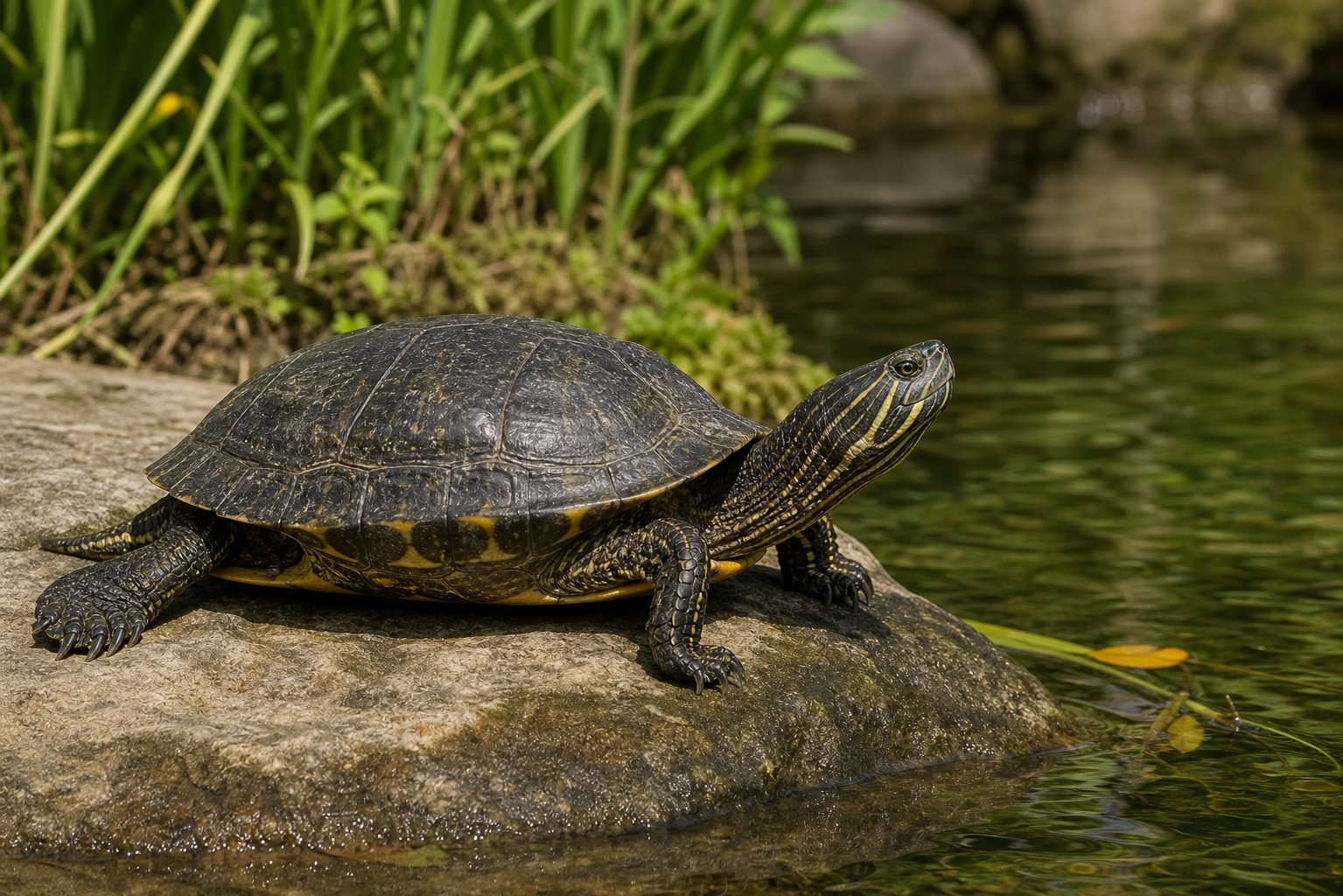
Pseudemys spp.
Cooters and related species, robust and often underestimated.
In simple terms
They seem calm and robust, but that robustness can be misleading: adults may need large, stable enclosures that are difficult to improvise at home.
Legal note
Being for sale or available online does not mean there are no obligations: identification and origin remain essential.
Care
Plan for adult size: stable water conditions, powerful filtration, effective basking and a diet with a substantial plant component.
Where it lives in the wild


Eastern and southern United States, with some species also occurring in north-eastern Mexico.
The colour combines several species: the distribution of any one Pseudemys is more limited and depends on its drainage basin and species.
Sources: The Reptile Database (1) · The Reptile Database (2) · The Reptile Database (3).
Read more
Members of the genus Pseudemys are often underestimated because they seem less ‘problematic’ than other species. In reality, their care requires space, stability and long-term planning. Housing acceptable for a juvenile can quickly become inadequate.
The adult diet often includes a significant plant component: continuing with excessively high-protein foods can contribute to imbalances, uneven growth and dirtier water. The filter must also be chosen for the actual waste load, not the volume rating for ornamental fish.
Before buying, ask whether you genuinely have room for the adult animal, can maintain its habitat consistently and have clear documentation of its origin.
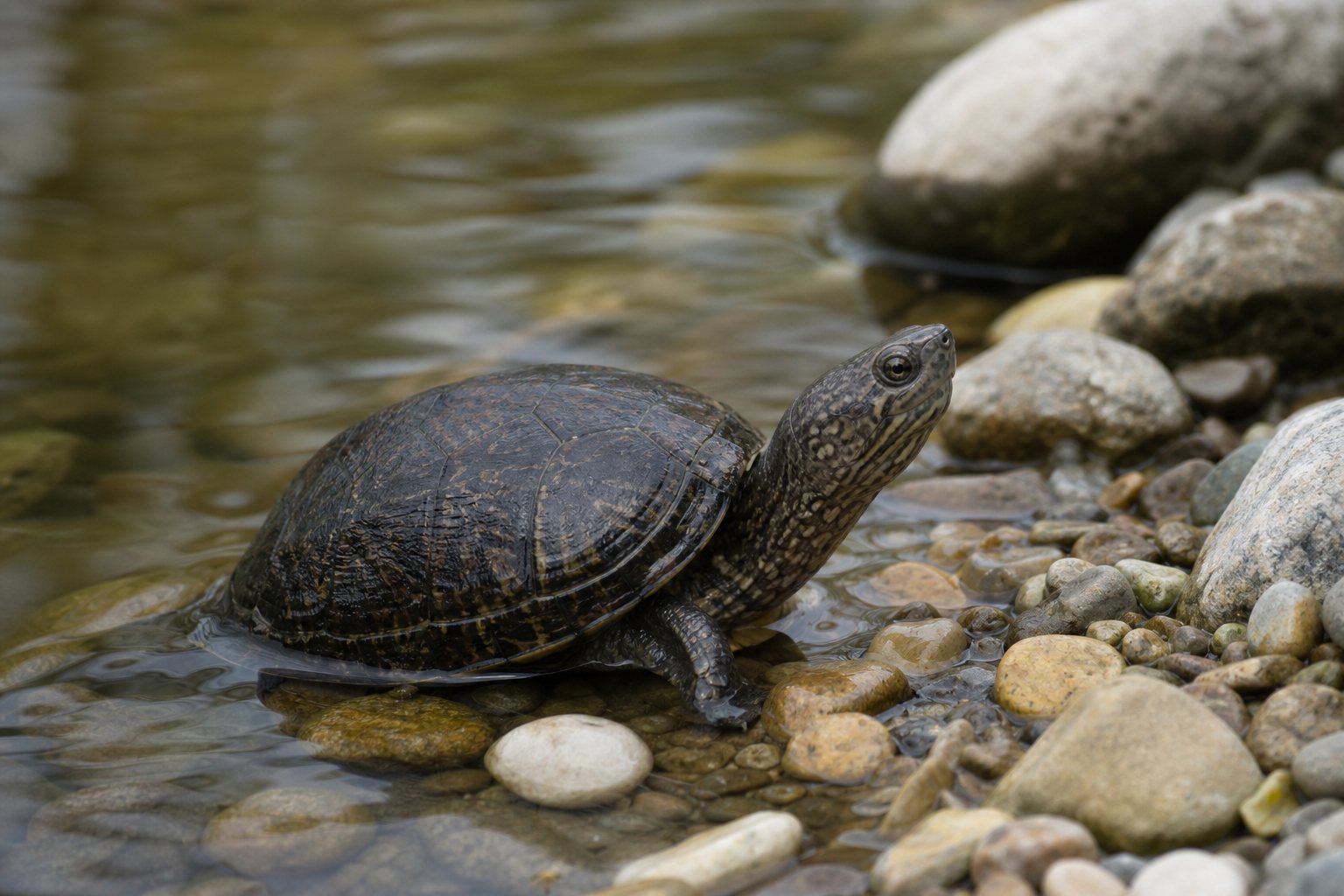
Sternotherus odoratus
Common musk turtle: small, but not simple.
In simple terms
Its small size is appealing, but does not make care trivial: it is not a turtle ‘for small spaces’, and its environment needs careful planning.
Legal note
As with any exotic species, check origin, documentation and applicable legislation before buying or transferring one.
Care
Plenty of footholds, safely manageable water, shelters, suitable filtration and reduced stress matter more than appearance.
Where it lives in the wild


Eastern North America, from southern Canada to the central and south-eastern United States.
The range includes very different freshwater habitats. The green band does not indicate continuous occurrence or include introductions beyond the native range.
Sources: The Reptile Database.
Read more
Sternotherus odoratus is often chosen because it stays smaller than many commonly kept aquatic turtles. This can make it more manageable, but only if the environment is built around its behaviour: it is not a species to put in an empty tank with a little island.
It needs footholds, shelters, resting areas and carefully considered depth. Water that is too deep without resting points can increase stress and risk, while a bare environment restricts behaviour and exploration. A basking area and water quality remain important, even though this species may use space differently from large basking turtles.
Cohabitation with other animals requires careful assessment: size, sex, temperament and competition can lead to bites or chronic stress.
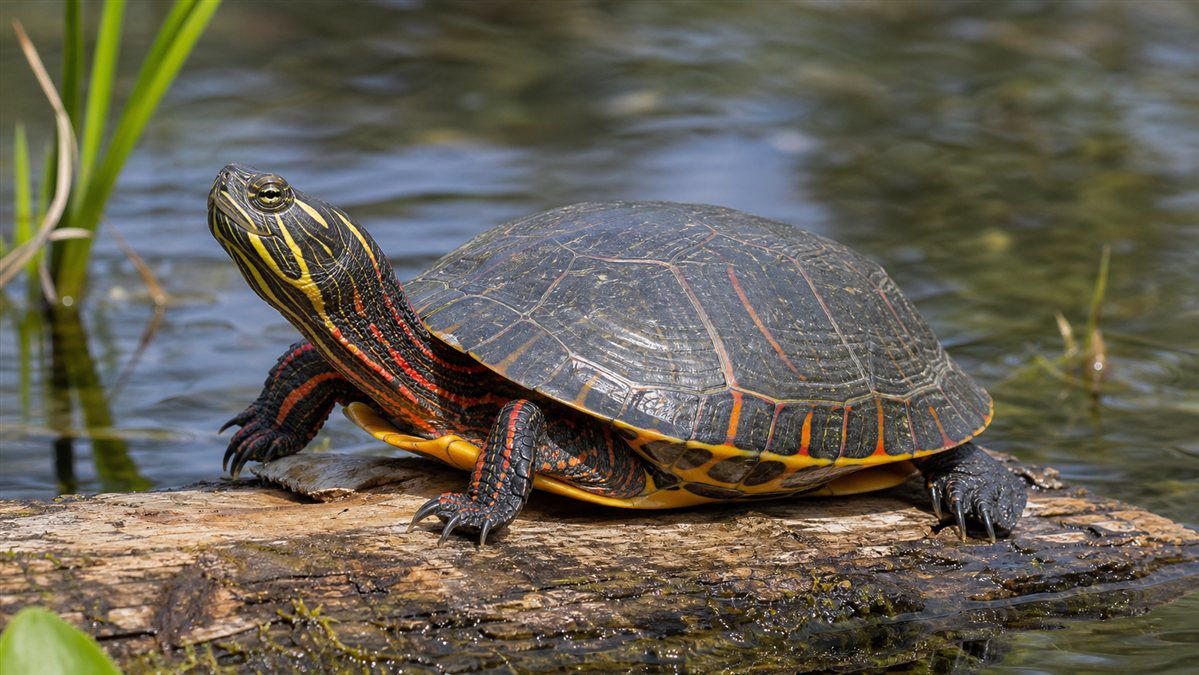
Chrysemys picta
North American painted turtle, often sought for its colours and moderate size.
In simple terms
Its elegant appearance is appealing, but it is still an active, long-lived turtle that needs light, warmth and real space.
Legal note
Always check origin, documentation and current legislation. Do not rely on commercial names.
Care
Needs a well-filtered tank, a dry basking area, UVB, stable basking conditions and a diet varied according to age and season.
Where it lives in the wild


Southern Canada and much of the United States, with more fragmented western populations and southern occurrences extending into northern Mexico.
This summarises the range of C. picta: the distinct Chrysemys dorsalis and introduced populations are deliberately excluded.
Sources: The Reptile Database.
Read more
Chrysemys picta is often seen as more manageable than very large turtles, but that does not make it simple. Lighting quality, the ability to thermoregulate and stable water conditions directly affect behaviour, feeding and health.
A common mistake is buying the animal for its appearance without planning for adult size, filter maintenance and the length of the commitment. As with all exotic species, any movement or transfer should be traceable and consistent with legislation.
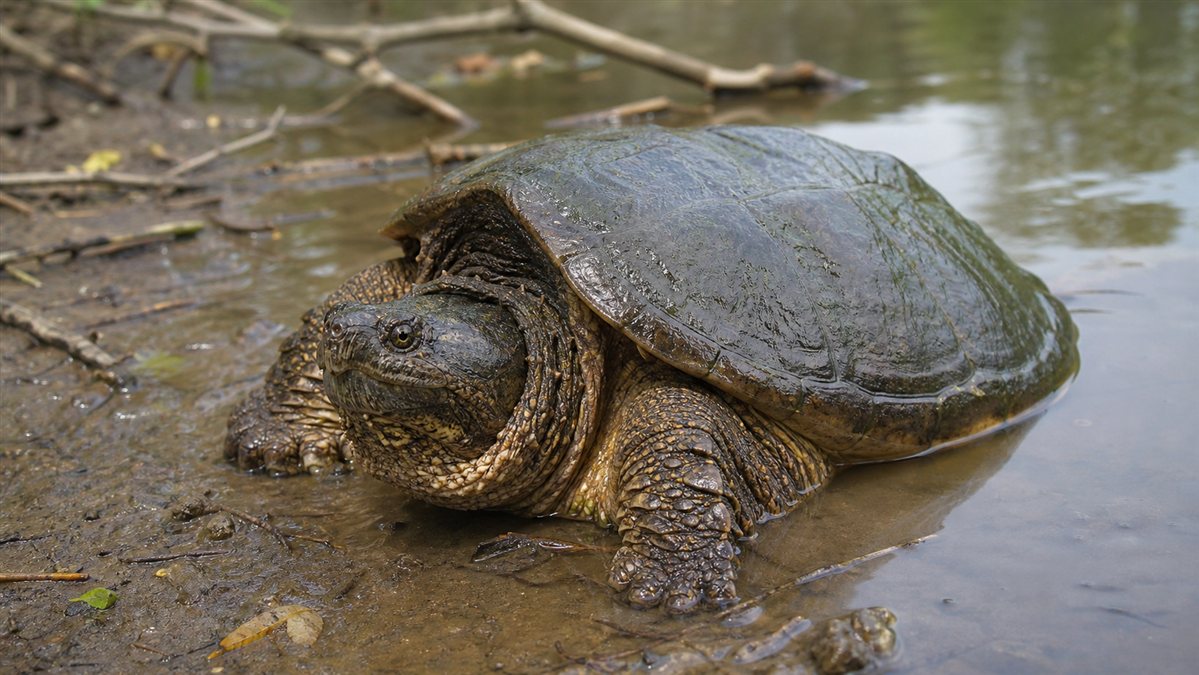
Chelydra serpentina
Common snapping turtle: powerful and unsuitable for inexperienced keepers.
In simple terms
Not a turtle to keep as a curiosity: it grows, is strong, can inflict serious bites and needs specialist facilities.
Legal note
Before keeping or moving one, legal, documentation and safety checks are essential.
Care
Needs ample space, physical safety measures, expert care and no unnecessary handling.
Where it lives in the wild


North America: southern Canada and the United States, mainly east of the Rocky Mountains.
Do not confuse it with other Chelydra from Central and South America. Introductions outside its native range are not shown.
Sources: The Reptile Database.
Read more
Chelydra serpentina should not be assessed by the standards used for common aquarium turtles. Its powerful bite, growth, lifespan and need for secure containment make it unsuitable for most home settings.
Responsible care must consider the safety of the turtle, people, other animals and the environment. If one is found or can no longer be cared for, the answer is to contact competent organisations or authorities, not arrange an informal transfer or release it.
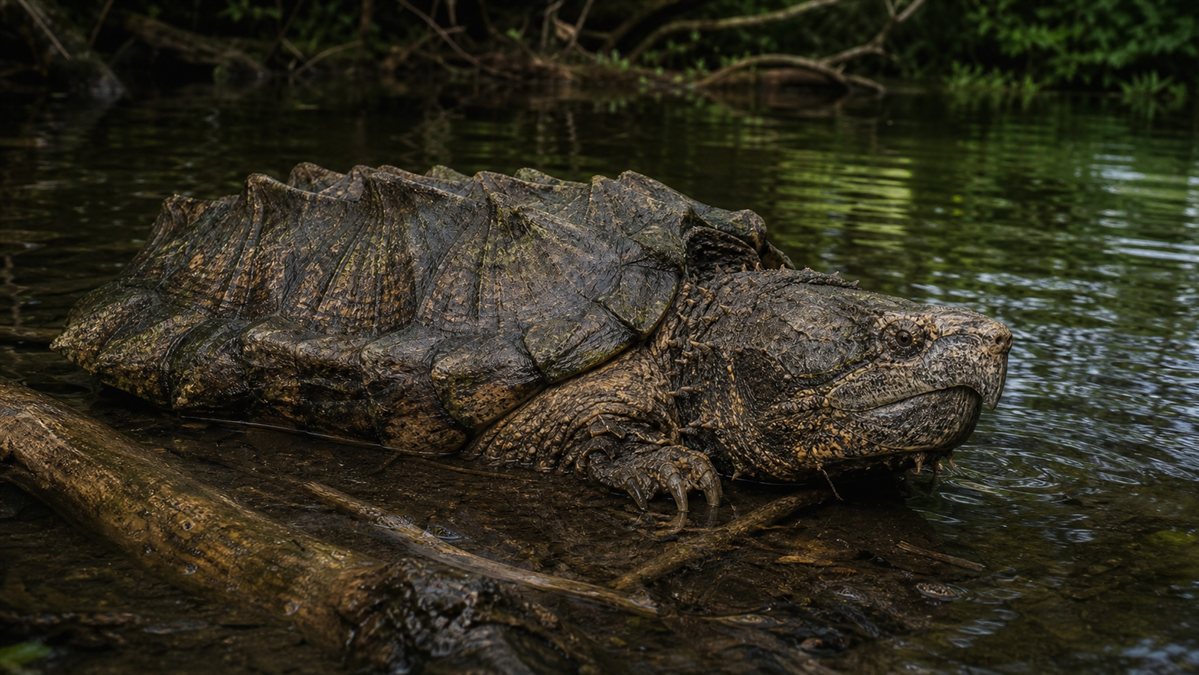
Macrochelys temminckii
Alligator snapping turtle: an iconic species with highly specialised requirements.
In simple terms
Its prehistoric appearance is fascinating, but this is a species that must never be an impulse purchase.
Legal note
Documentation, origin, legislation and authorisations must be checked before any decision.
Care
A closely controlled environment, safety, experience and suitable facilities are minimum requirements, not optional extras.
Where it lives in the wild


The Mississippi basin and other river basins in the southern United States that drain into the Gulf of Mexico.
Distribution follows river basins. The Suwannee alligator snapping turtle, Macrochelys suwanniensis, is distinct: not all of Florida is represented.
Sources: The Reptile Database.
Read more
Macrochelys temminckii is often presented online as a spectacle, but that is precisely the problem: it should not become an attraction in someone’s home. Size, strength, feeding, safety and lifespan require skills and facilities beyond ordinary husbandry.
Before even discussing a tank or diet, ask whether keeping it is lawful, documented and compatible with animal welfare and safety. For the general public, the most responsible choice is not to buy one.
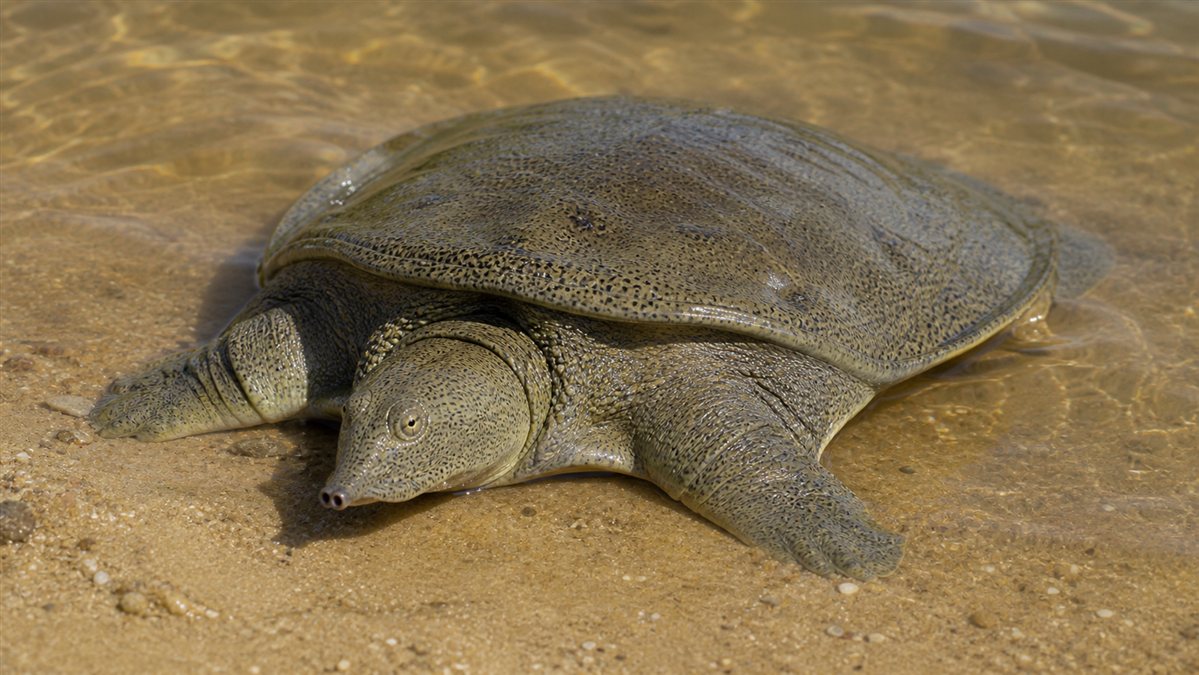
Apalone spinifera
Spiny softshell turtle: delicate and very different from species with a rigid carapace.
In simple terms
Not an ‘unusual’ turtle to put in just any tank: its skin, shell and water need extra attention.
Legal note
Check species, origin and documentation carefully before buying or transferring one.
Care
Very clean water, a non-abrasive substrate, swimming space and minimal stress are central.
Where it lives in the wild


Central and eastern North America, from southern Canada to northern Mexico.
Subspecies and populations occupy different drainage basins; Canadian populations are highly localised. Western introductions are not highlighted.
Sources: The Reptile Database · Government of Canada.
Read more
Softshell turtles have needs that are often underestimated: their skin and carapace are more exposed to injuries, abrasions and water-quality problems. Sharp furnishings, the wrong substrate or weak filtration can quickly become a problem.
Apalone spinifera needs a clean, stable environment designed around its behaviour. It is unsuited to casual cohabitation or decorative setups planned more for the human eye than the animal.
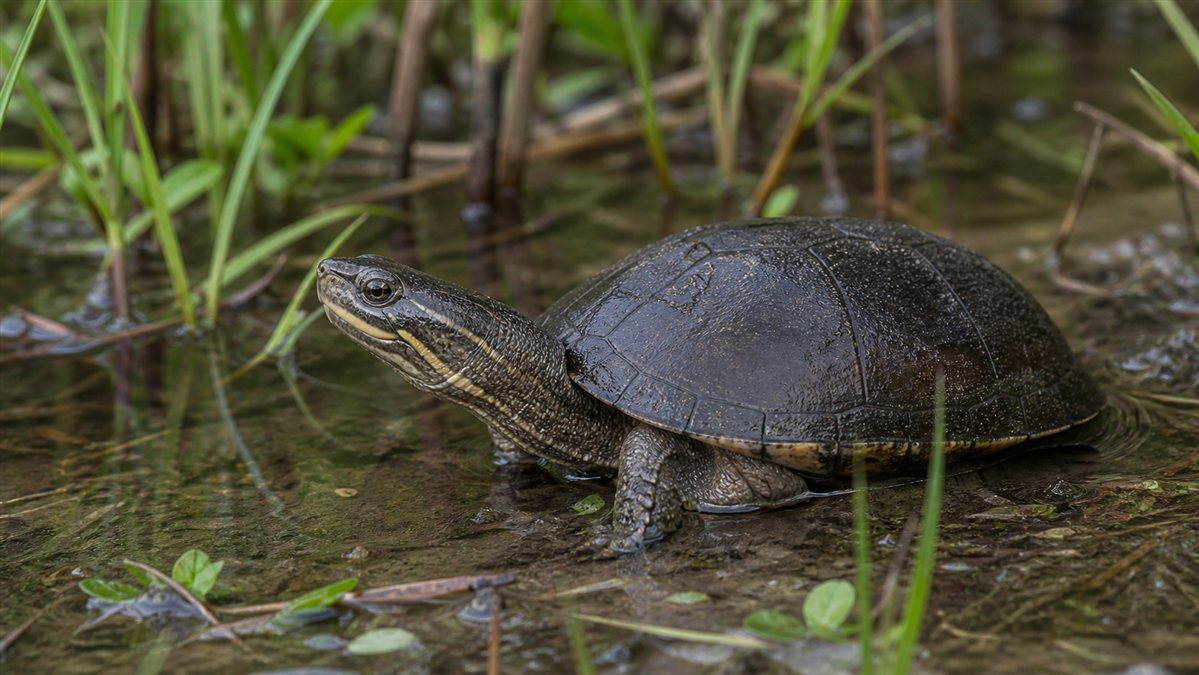
Kinosternon baurii
Striped mud turtle: small, but with specific environmental needs.
In simple terms
Small size must not be taken to mean minimal care: shelters, footholds and safety are needed.
Legal note
As with all exotic species, a clear origin and checks on applicable rules are essential.
Care
A structured, safe environment is better than a deep, empty tank. Take care over stress and cohabitation.
Where it lives in the wild


The Atlantic coastal plain of the United States, from the Delaware–Virginia area to Florida and the Keys.
A relatively narrow range: the map shows the broad geographic band, not every watercourse or habitat actually occupied.
Sources: The Reptile Database · IUCN TFTSG — scientific account.
Read more
Kinosternon baurii may appeal to someone seeking a small species, but that does not mean it needs little. Its environment should provide resting areas, shelters, manageable water and footholds.
Many mistakes come from confusing ‘small’ with ‘easy’. A less bulky species still needs stability, a suitable diet, hygiene and observation. Cohabitation must be assessed case by case.
South America
The great tropical river systems reveal a scale of aquatic life very different from that of our ponds.
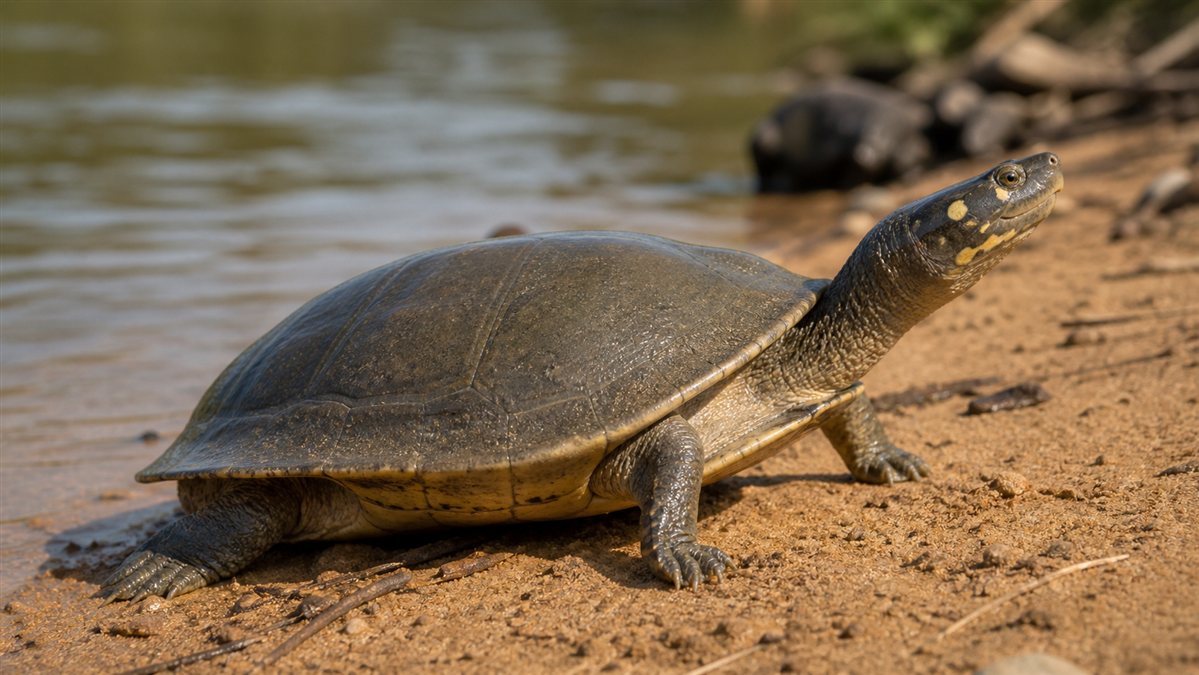
Podocnemis unifilis
A South American turtle that can grow large and demand a substantial commitment.
In simple terms
Not a species for a makeshift flat setup: size, space and documentation must be considered beforehand.
Legal note
Check CITES, origin and applicable legislation carefully before any movement.
Care
Needs ample water, a warm environment, stability and realistic planning for adult size.
Where it lives in the wild


Tropical South America: the Amazon and Orinoco basins, with occurrences in the Guianas.
Distribution is linked to river systems and floodplains. The green band does not mean the species occupies every habitat in the region.
Sources: The Reptile Database.
Read more
Podocnemis unifilis is an example of a species that requires thinking beyond a home tank. Its space requirements, temperature management, water quality and lifespan make any impulsive choice irresponsible.
Documentation is central: for South American and less common species, check origin, any CITES requirements and applicable national rules. Without clear documentation, do not proceed.
Oceania
We end our journey in Australia and New Guinea, home to turtles with distinctive evolutionary histories and needs.
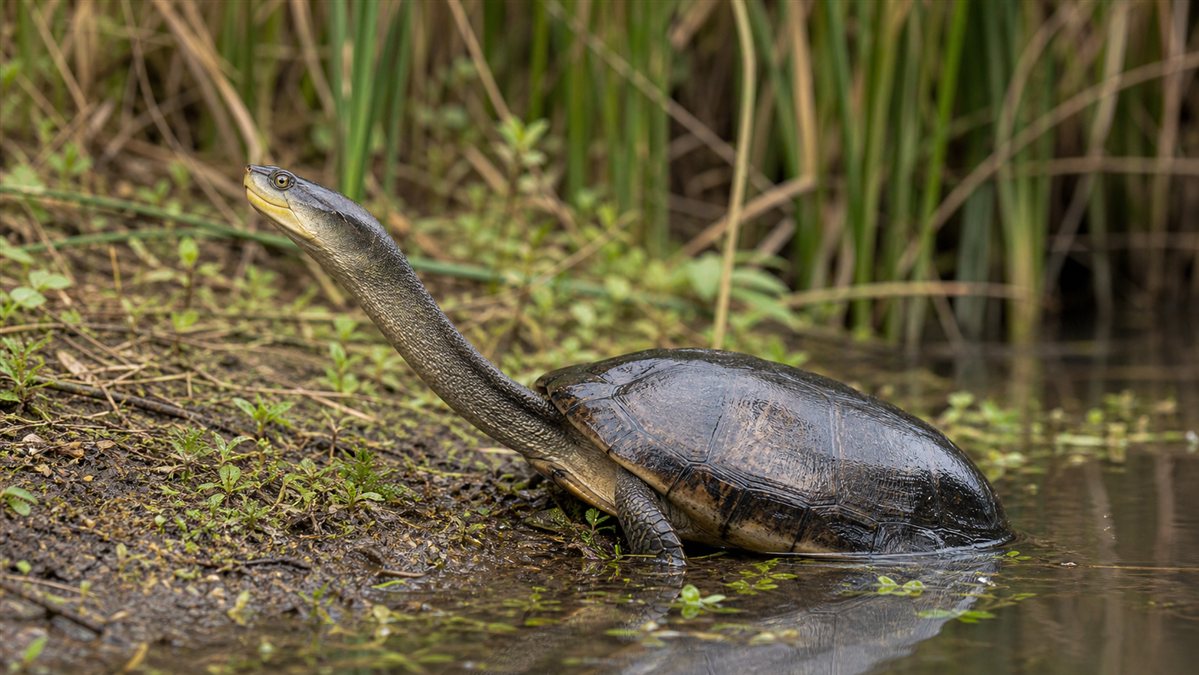
Chelodina longicollis
An Australian long-necked turtle: distinctive and often misunderstood.
In simple terms
Its unusual appearance should not be a reason to buy it: behaviour, feeding and environment are species-specific.
Legal note
Origin and documentation are particularly important for less common species.
Care
Needs a setup suited to an aquatic predator, with clean water and reduced stress.
Where it lives in the wild


Eastern and south-eastern Australia: from Queensland through New South Wales and Victoria to part of South Australia.
It is not distributed throughout Australia. Green summarises the mainland native region; Tasmania is excluded.
Sources: The Reptile Database.
Read more
Chelodina longicollis should not be kept like a generic North American basking turtle. Its morphology, hunting method, posture and behaviour require a specifically designed environment.
Diet and water management need careful attention to avoid imbalances and rapid deterioration. Cohabitation with other animals is often problematic and should be avoided without genuine expertise.
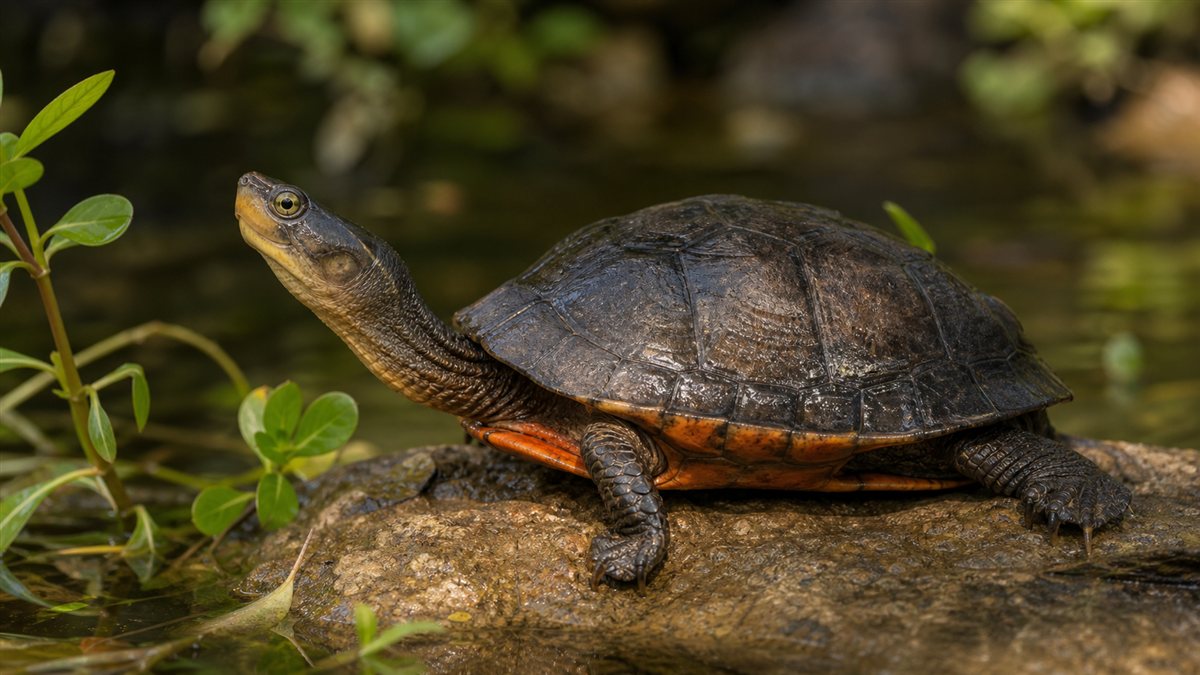
Emydura subglobosa
Red-bellied turtle: tropical and sensitive to inadequate temperature management.
In simple terms
Its colours are striking, but appearance should not determine the choice: temperature and environmental stability are crucial.
Legal note
Check origin, documentation and applicable legislation before buying, transferring or keeping one.
Care
A warm, stable environment, clean water, an accessible basking area and a carefully balanced diet are essential.
Where it lives in the wild


Southern New Guinea and a very restricted area at the northern tip of Cape York, Australia.
The core range shown is that of E. subglobosa in the strict sense. Boundaries with related forms, including worrelli, require taxonomic care.
Sources: The Reptile Database.
Read more
Emydura subglobosa needs consistent temperature management all year round. It is not a species to place in cold or uncontrolled, fluctuating conditions: water temperature, the drying area and protection from cold draughts are all part of its welfare.
Its visual appeal must not lead to a superficial purchase. Water quality, diet and space should be planned before the animal arrives.
Before taking in any species
Identify
Species and subspecies matter. A generic photograph is not enough to determine obligations and care.
Verify
Check legislation, origin, documentation and possible restrictions before moving the animal.
Prepare
The tank, filter, UVB, heat, basking area and diet must be ready before arrival.
Protect
Never release into the wild, never allow uncontrolled breeding and never arrange informal transfers.
Scientific and legal sources to consult
Map base: Natural Earth, public domain. Ranges editorially summarised from the sources listed in each profile; maps updated in September 2026. These are not official maps or locations for wildlife sightings.
Taxonomy may be updated as new research emerges; conservation status and legal obligations can also change. An authoritative guide therefore identifies its sources and encourages verification of each specific case.
If this page has helped you see why greater care is needed, you can support the editorial project and the Foundation’s mission: become a Guardian.
Frequently asked questions
How can I identify my turtle’s species?
You need clear photographs of the head, carapace and plastron, and its size. If in doubt, ask knowledgeable people.
Do different species have different needs?
Yes. Space, diet, temperature, depth and legal requirements can vary considerably.
Are images enough to identify a species?
They help, but are not always enough: age, hybrids, altered colours and poor photographs can be misleading.
What should I check before buying?
Species, adult size, documentation, legal obligations, costs and whether you can genuinely provide a home for years to come.
Unsure of the species?
Gather photographs, origin documents and size information. Avoid buying or transferring the animal until its identity and the obligations are clear.
See which photographs are neededEditorial note
Disclaimer: This guide is for information only and does not replace advice from a vet experienced in reptiles, the relevant authorities or a legal adviser where necessary.