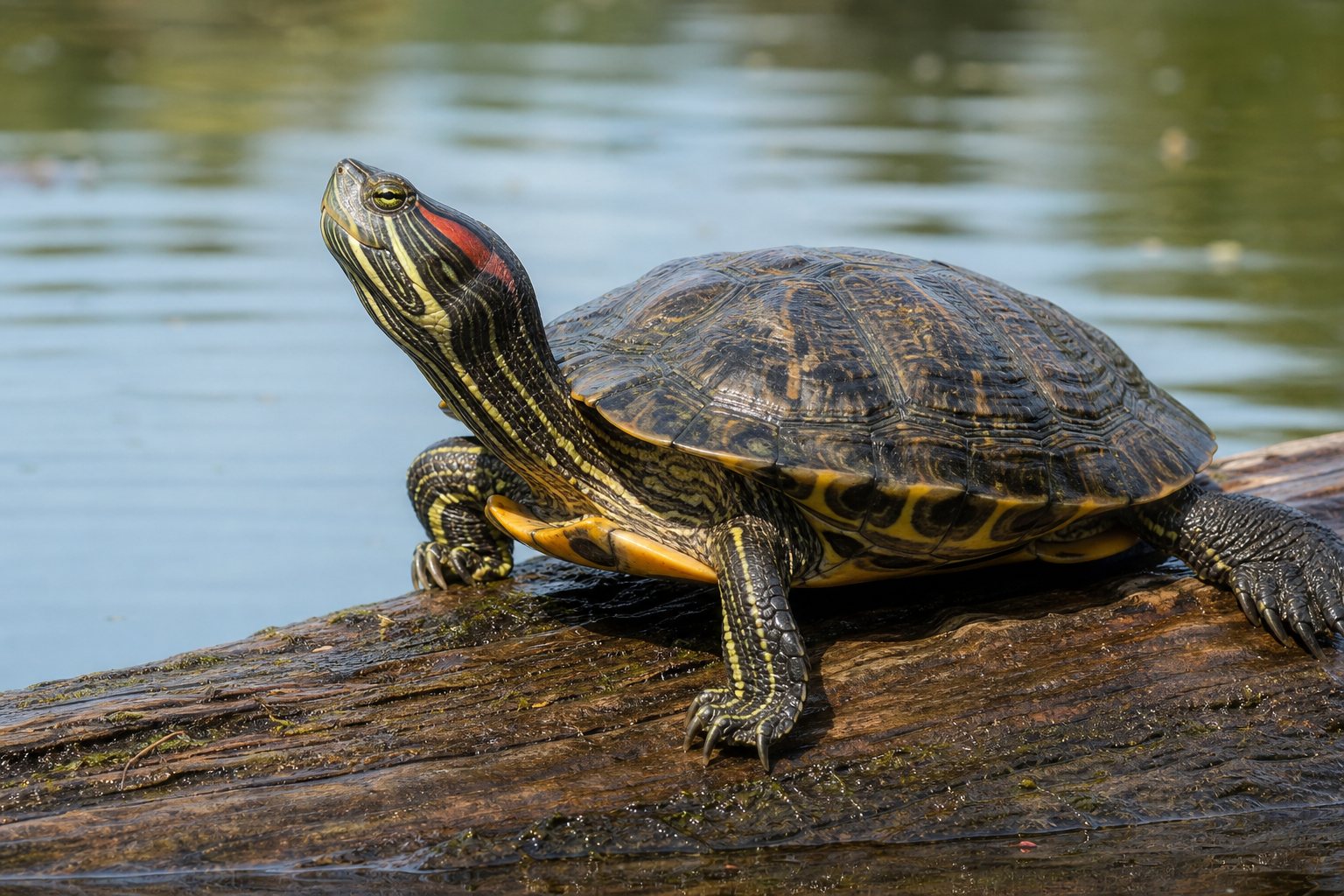
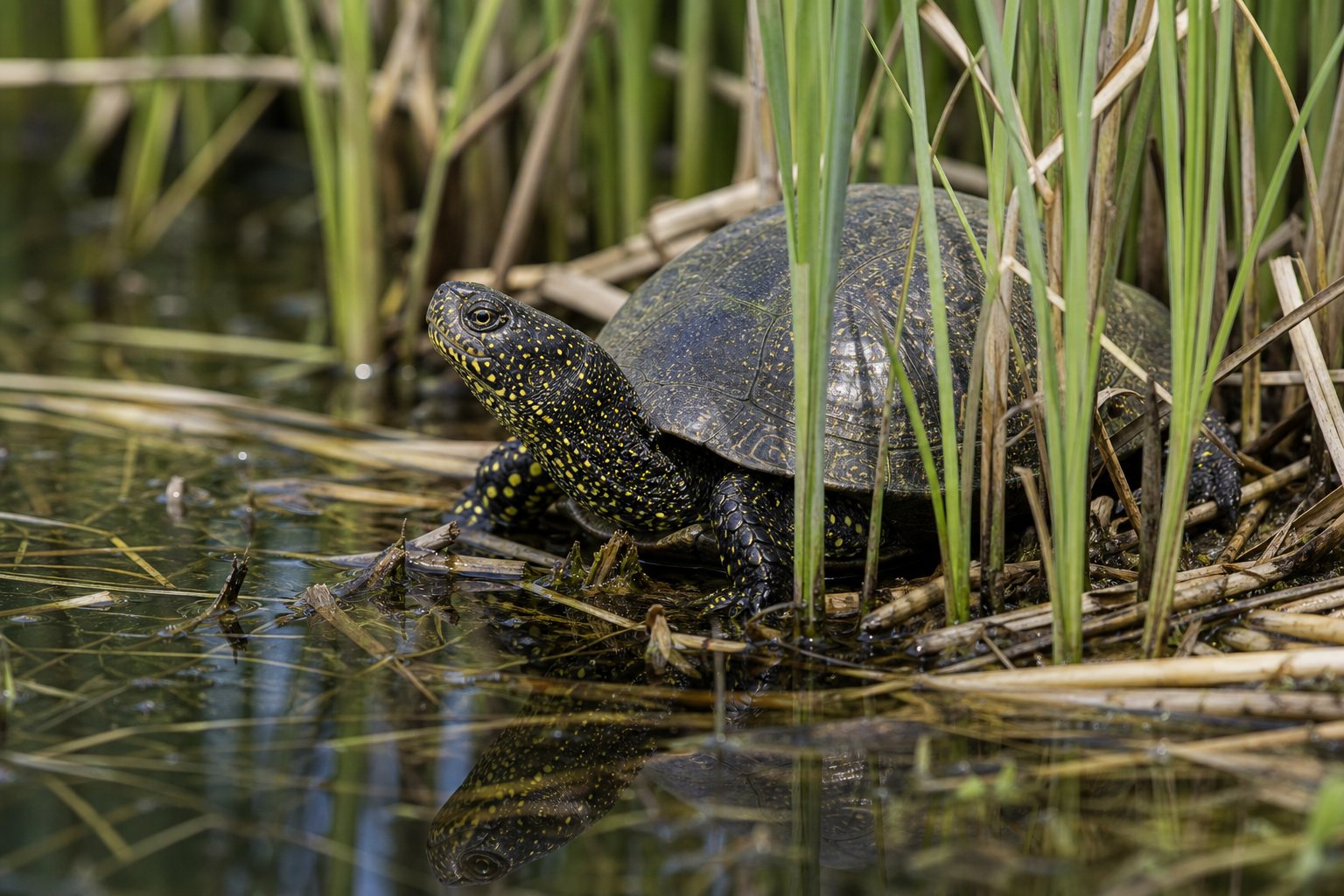
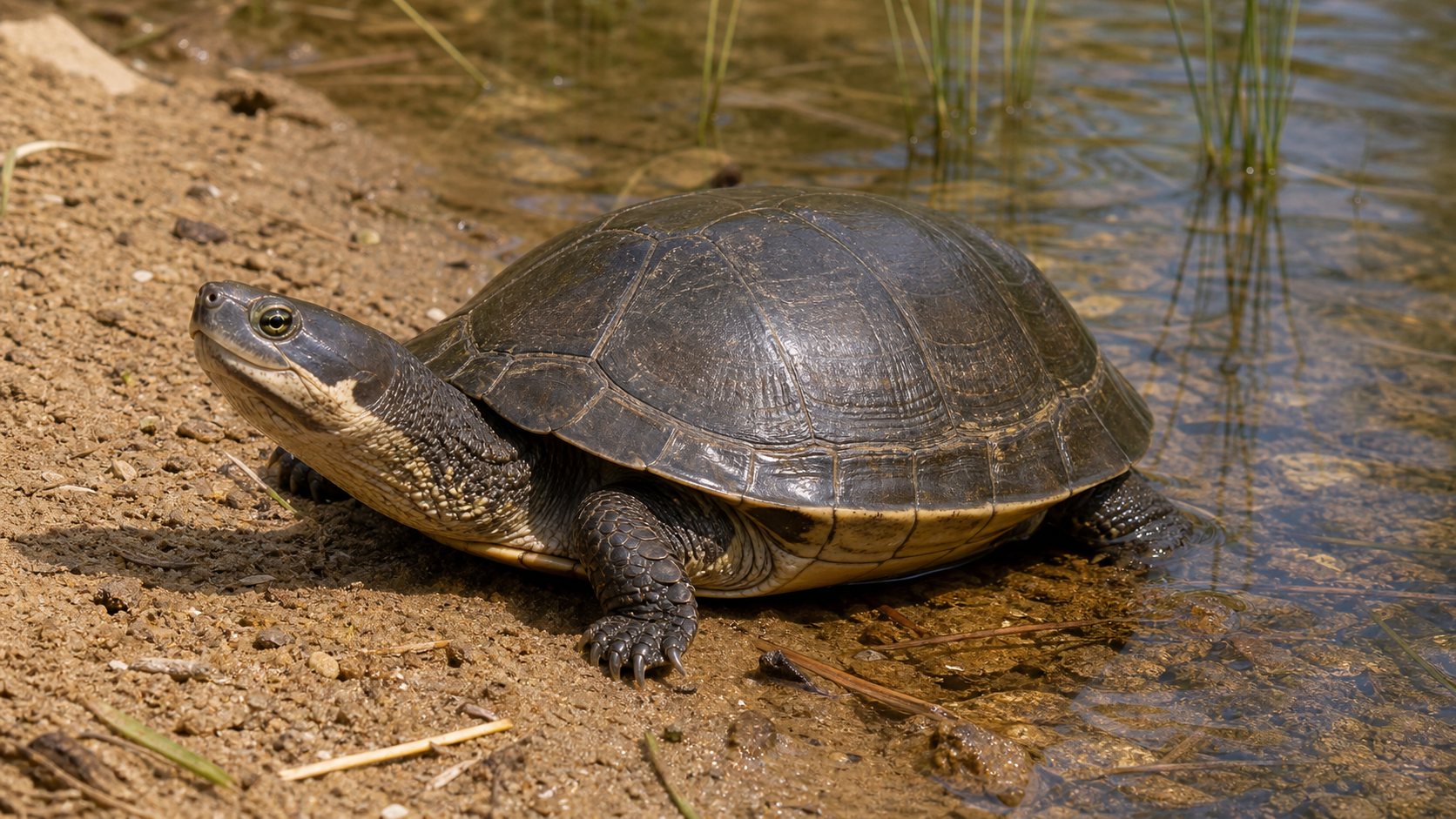
An adult takes responsibility
Children can observe, help and learn, but decisions remain with an informed adult.
Read the tipsPractical, lawful and responsible care
Whether you have bought, been given or found an aquatic turtle, here you will find clear answers about species, tanks, lighting, feeding, health, legal obligations and responsible choices. First, understand the animal; then decide what to do.
Before you buy
Many turtles arrive in homes as small gifts: they cost little, seem quiet, fit in a tiny tank and look like a harmless present. But a living animal is not an educational toy to leave to a child’s curiosity.
Children can learn a great deal from watching a turtle, but an adult must always take responsibility. Housing, food, hygiene, legislation, veterinary bills and difficult decisions cannot be left to someone who is still learning to look after themselves.
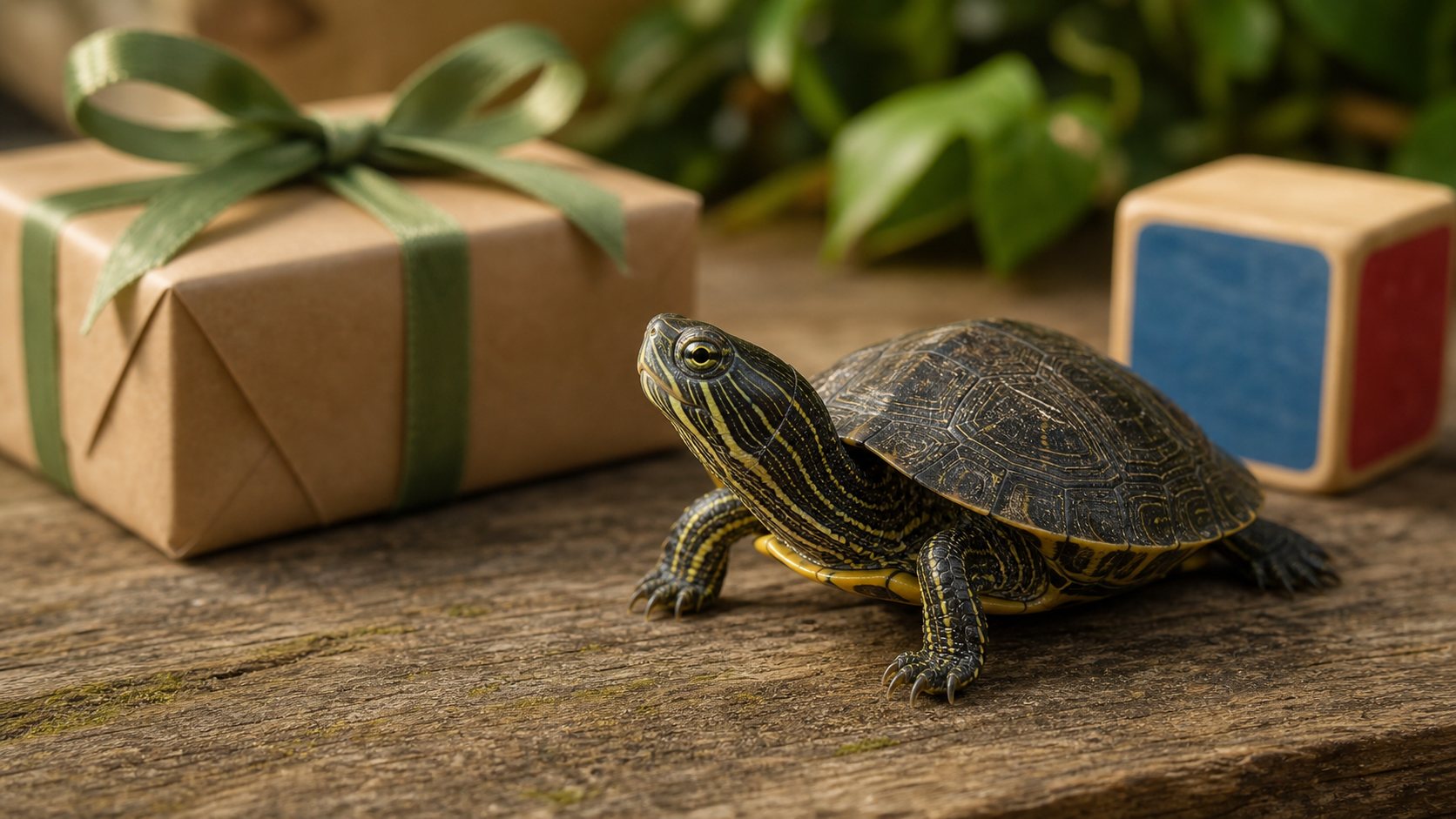
If the gift has already been given
Children can observe, help and learn, but decisions remain with an informed adult.
Read the tipsBefore buying accessories at random, find out which animal you have and what obligations may apply.
Explore the speciesA temporary container must not become a lifelong home. Start with water, light, heat, a dry basking area and safety.
Plan the habitatThe first thing to understand
It is a long-lived animal, sensitive to its surroundings and often larger and more demanding than it appears when young. It needs clean water, a dry basking area, appropriate lighting, a suitable diet and, when necessary, an experienced vet.
Our aim is for you to leave with one more practical step you can take: a better tank, a mistake avoided, a clearer question for an expert or a more considerate decision.
Choose your starting point
Check whether its habitat really allows movement, drying off, access to light and warmth, stable water conditions and natural behaviour. Many problems stem from small mistakes repeated every day.
Review the habitatBefore buying, consider the species, adult size, costs, lifespan and legislation. The most ethical choice is the one you make before impulse takes over.
Read before decidingDo not move it without good reason, take it home without checking or release it elsewhere. Document what you have found and ask for advice.
What to do nowWhy we grow attached
A turtle basking in the sun, exploring, eating well or diving confidently tells us something: its environment is working. Curiosity and affection only help when they lead to responsible care.
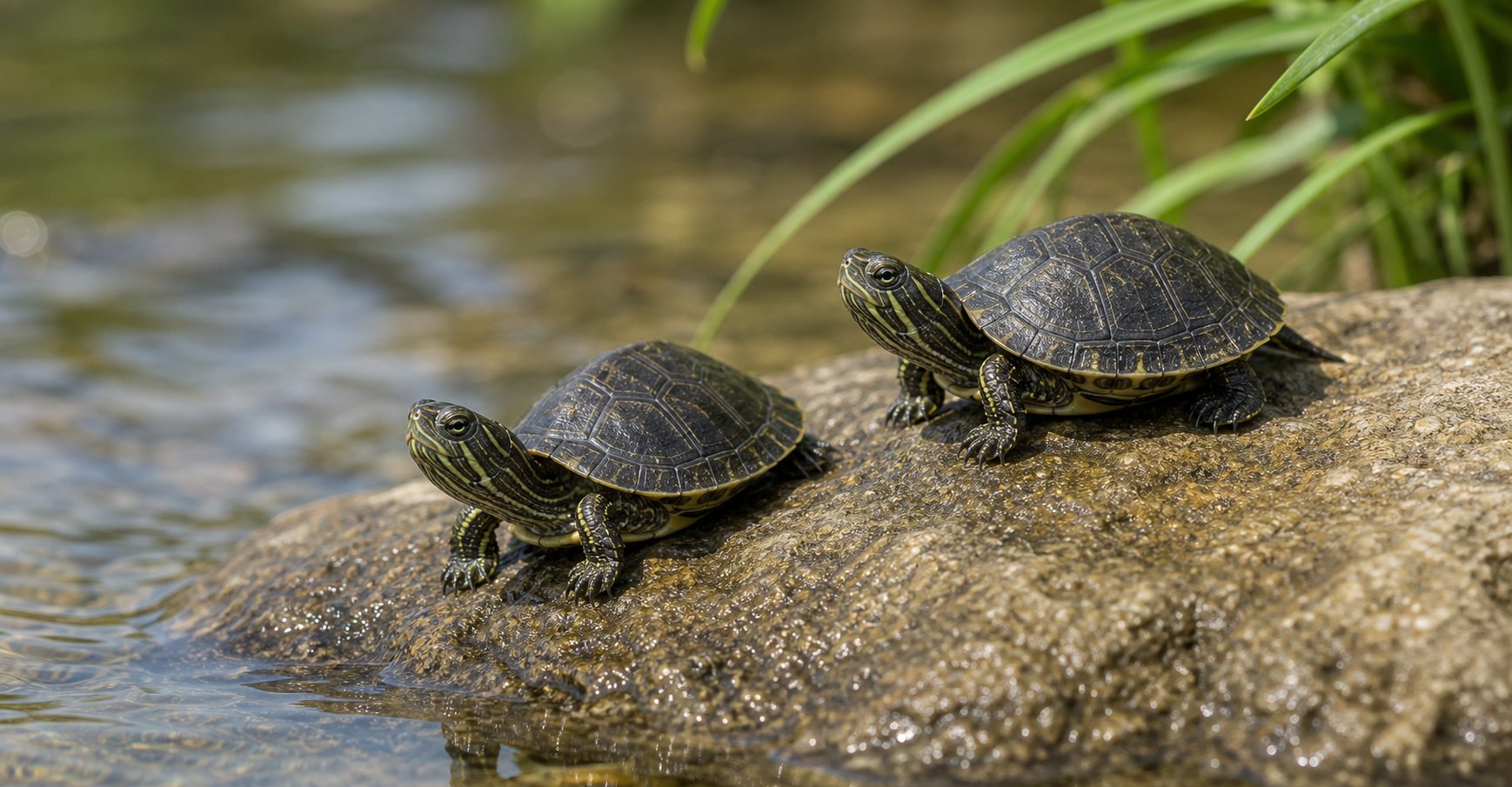 Watching
 Basking
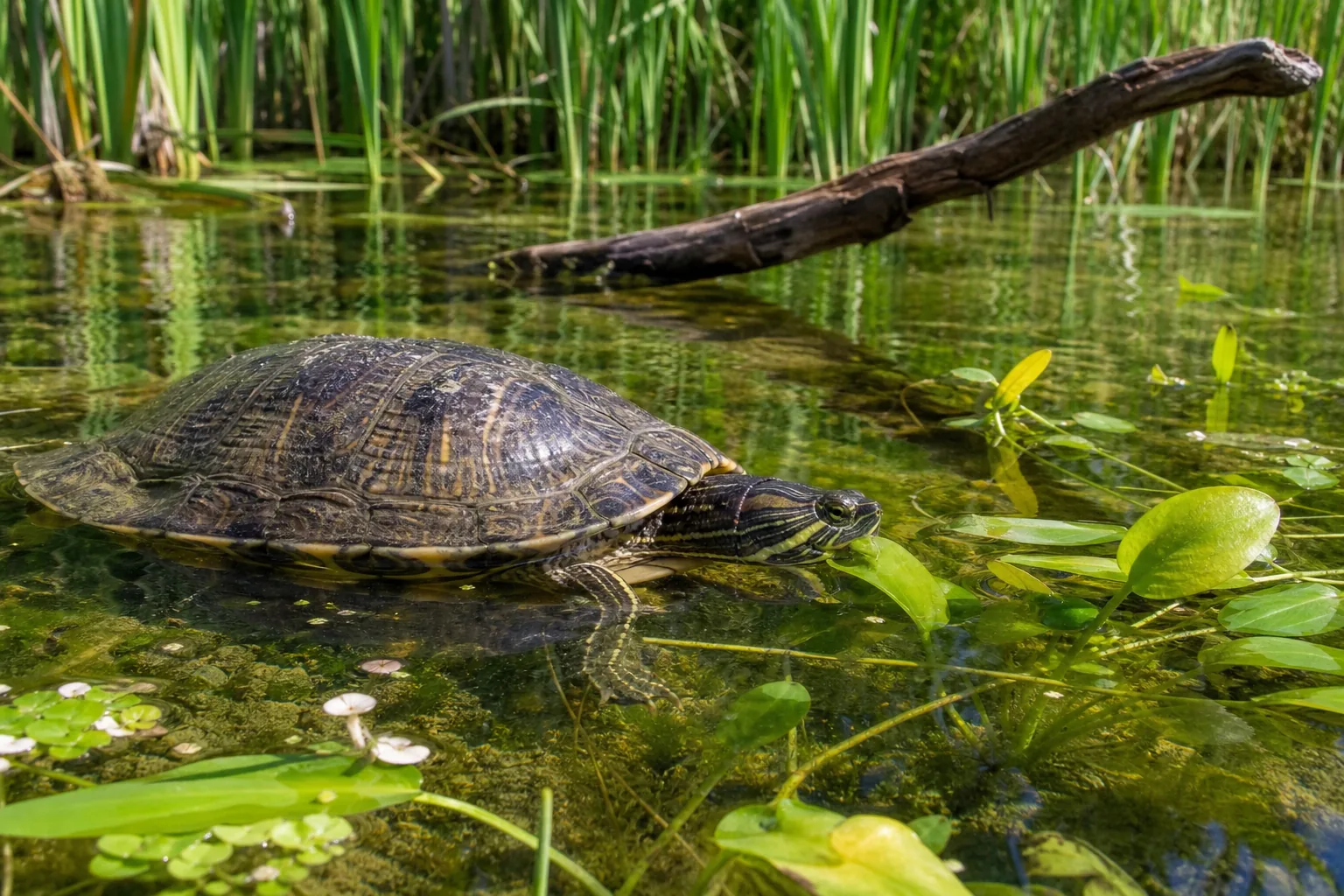 Exploring
Main guides
From identifying a species to daily care: choose the topic you need, compare sources and recognise when qualified help is needed.
Photos, descriptions, legal concerns and the main needs of common species and those that should not be kept.
Explore the profiles The lawInvasive alien species, Trachemys, CITES, keeping and transferring animals, found turtles and official sources.
Understand your obligations HabitatA pond, indoor enclosure or aquarium is simply a means to an end: recreating natural functions and supporting everyday welfare.
Plan the habitat Everyday careAge, species, plants, pellets, protein, calcium and the mistake of feeding only dried shrimp.
Review the diet WelfareSwollen eyes, lethargy, abnormal buoyancy, a soft shell, injuries and when to call a vet.
Recognise the signs Stay calm in an emergencyA simple procedure to avoid making things worse and ask for the right help.
Follow the stepsSpecies and images
Trachemys, Graptemys, Pseudemys, Sternotherus, Mauremys, Pelomedusa and Emys differ in legal status, adult size and care requirements. Images offer a starting point; reliable identification requires confirmation.
A shared responsibility
Information and conservation support one another. An informed choice can prevent suffering and abandonment; supporting the Foundation helps sustain its work for animals and nature.
The Foundation’s work

This website is an editorial project linked to the Foundation. Its aims include establishing ethical sanctuaries: places designed to care for animals that cannot be released and deserve a stable, caring home.
Become a GuardianFinding your way
Before moving it, releasing it or taking it home, gather information and move it to safety only if necessary.
What to do nowStart with the habitat, lighting, water, basking area and daily care: these are often the foundations of better health.
Check the habitatSpecies, documentation, origin and restrictions are not minor details: check first, then decide.
Read about legislationA photograph, a verified tip or an article by a professional can help other guardians.
Suggest a contributionGuardians’ tips
We have gathered practical tips for beginners, people already caring for a turtle and anyone wondering whether they are truly ready. Those with a well-founded contribution can then submit it to the editorial team.
Good advice can prevent an impulsive purchase, an unsuitable habitat, a poor diet or abandonment.
Read the tipsSupport the project
You can make a donation of your choice, find out what it means to become a Guardian or share an editorial contribution. Every form of participation can help spread knowledge and respect for animals.
One Foundation, two editorial projects
Each website has a distinct role. Here you will find guides to aquatic turtles; on Terra, guides to tortoises; and on the Foundation’s website, its mission, projects and ways to support its work.
Our vision, the Ethical Sanctuary, projects and transparency. The shared institutional reference point.
Get to know the FoundationTerrestrial species, habitats, feeding and reading to help you understand these animals.
Explore the Terra websiteFind out how to support the Foundation’s mission and projects on its official website.
Find out how to contributeNot as their direct responsibility. Children can observe and learn, but care, costs and decisions must remain with an informed adult.
No. You could harm the animal and the ecosystem, and breach wildlife and invasive species legislation.
Identify the species and check its habitat, UVB lighting, temperature, diet and documentation.
No. These guides help you understand and prevent problems, but symptoms, injuries or health concerns need a vet experienced in reptiles.