A guardian is not someone who ‘owns’ an animal, but someone willing to learn, correct mistakes and put the animal’s welfare before convenience.
Published tips
This section can grow over time into a small editorial resource: each tip has a photograph, a summary, an attribution and a source reference. External contributions may be signed by vets, biologists, teachers or verified guardians.
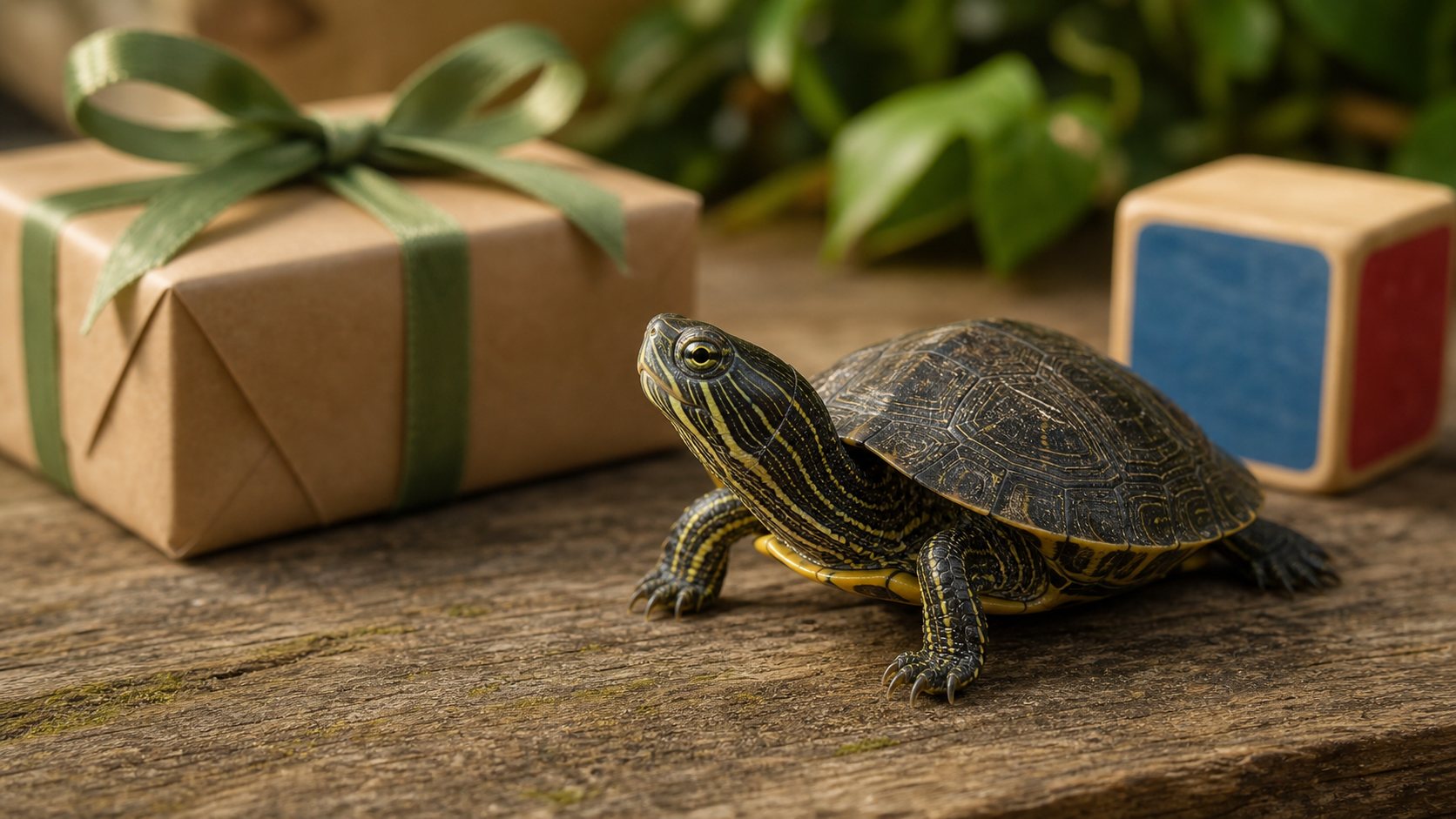
Before you buy
Not a gift for children
A turtle can teach observation and respect, but responsibility remains with an adult: housing, diet, cleaning, legislation and healthcare are not tasks to leave to a child.
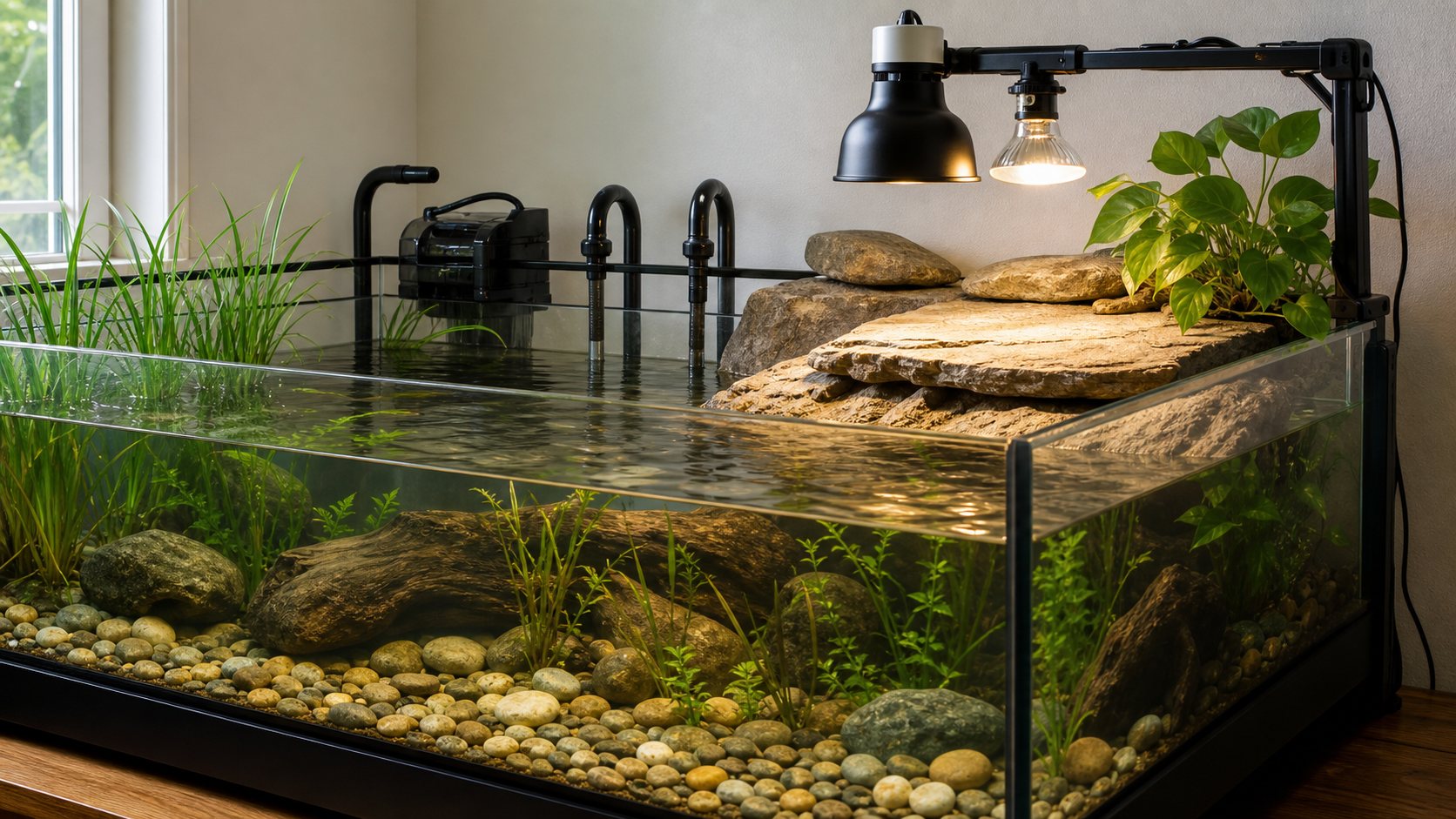
Habitat
Think about the environment before the tank
The right question is not ‘where do I put it?’ but ‘which natural functions do I need to recreate?’ Movement, drying off, warmth, UVB, shelter and stable water conditions come before appearance.
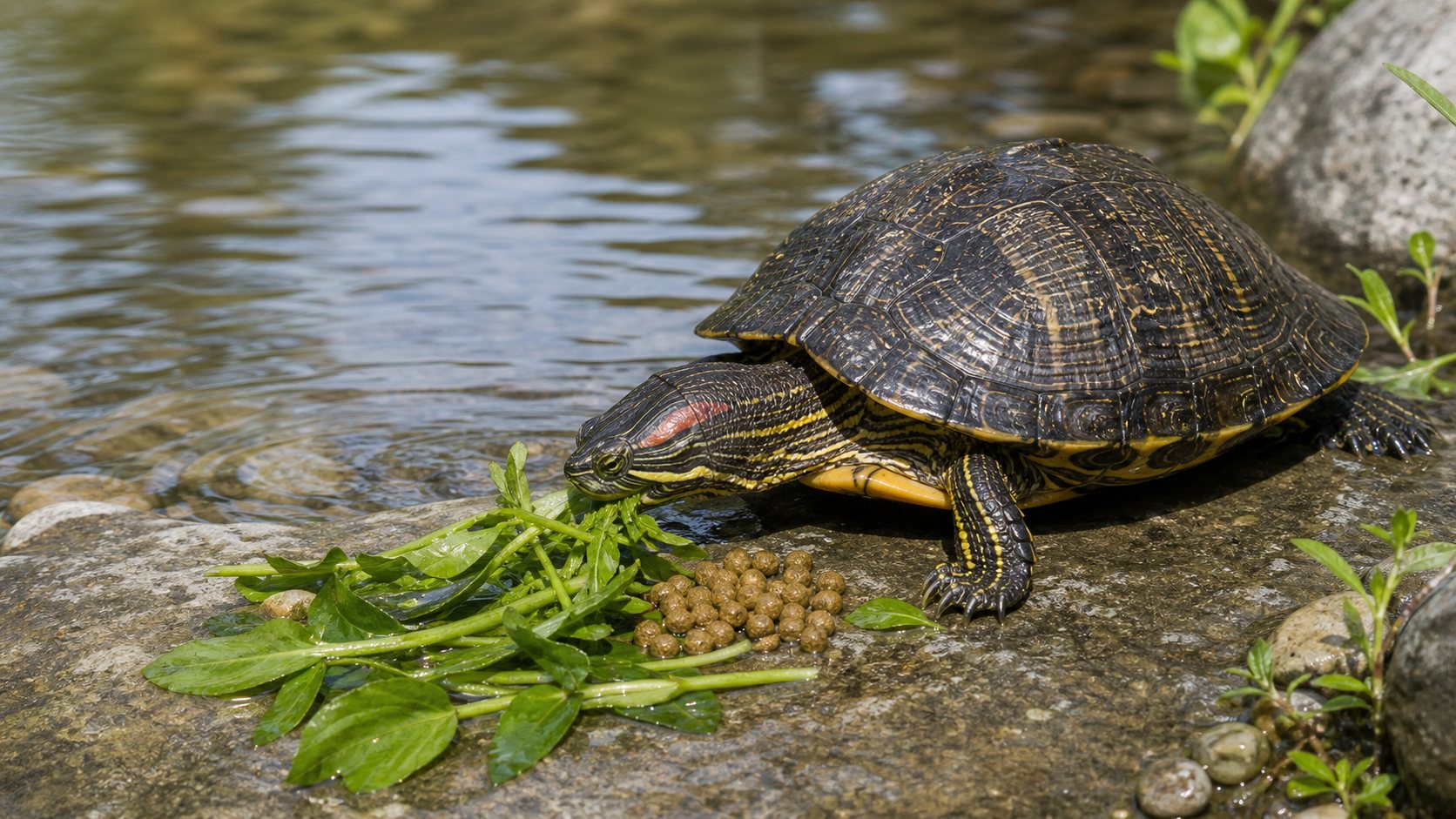
Feeding
Before choosing food, ask what it would eat in the wild
Start with the species, not the shelf. Plants, protein, calcium and pellets only make sense within a diet suited to age, environment and actual needs.
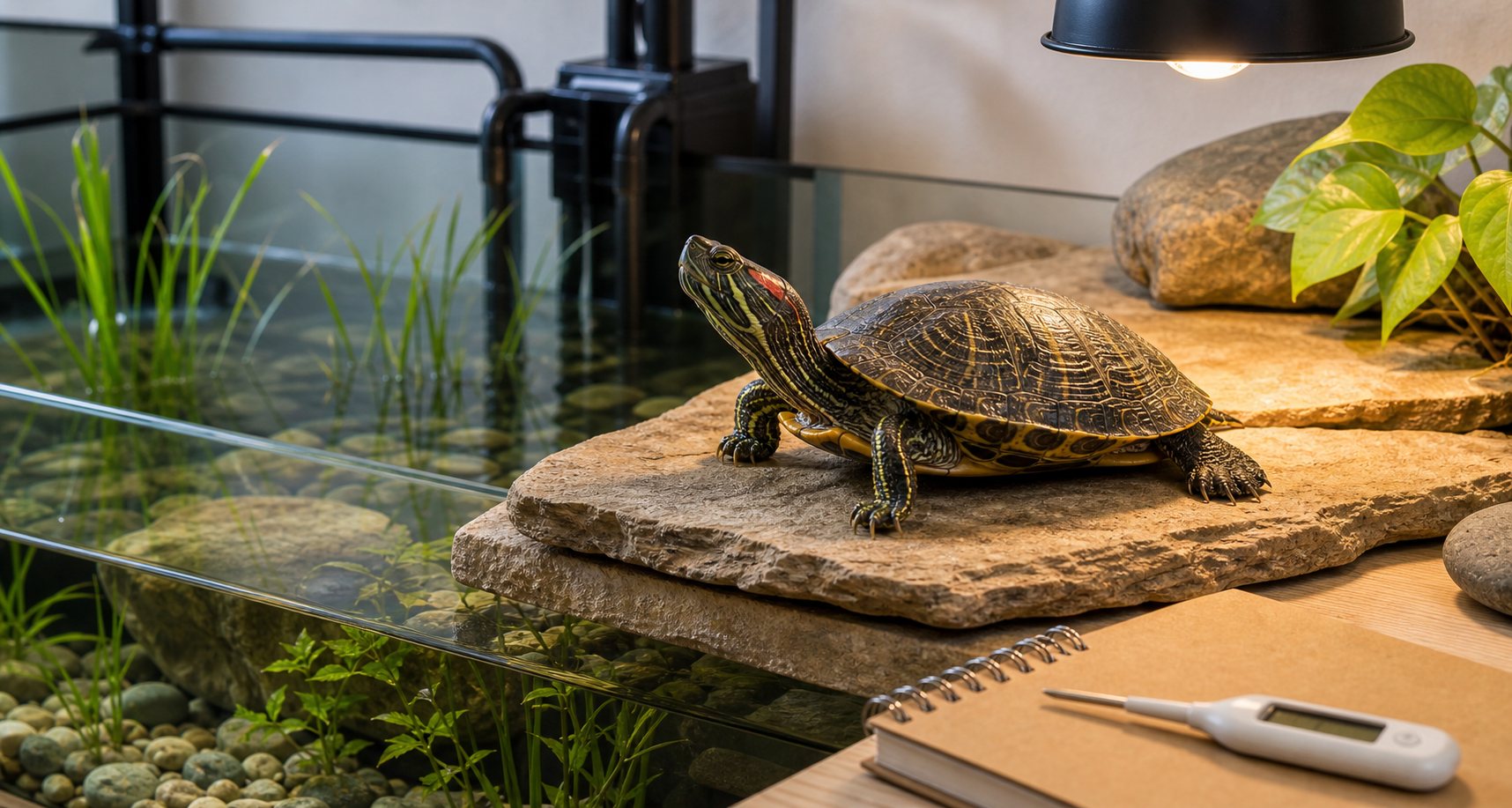
Health
Prevention is kinder than treatment
Many problems stem from unsuitable environments, diets and temperatures. Watching the eyes, breathing, appetite, swimming and shell helps you act before a problem becomes serious.
Informed choice
Consider smells, cleaning and growth
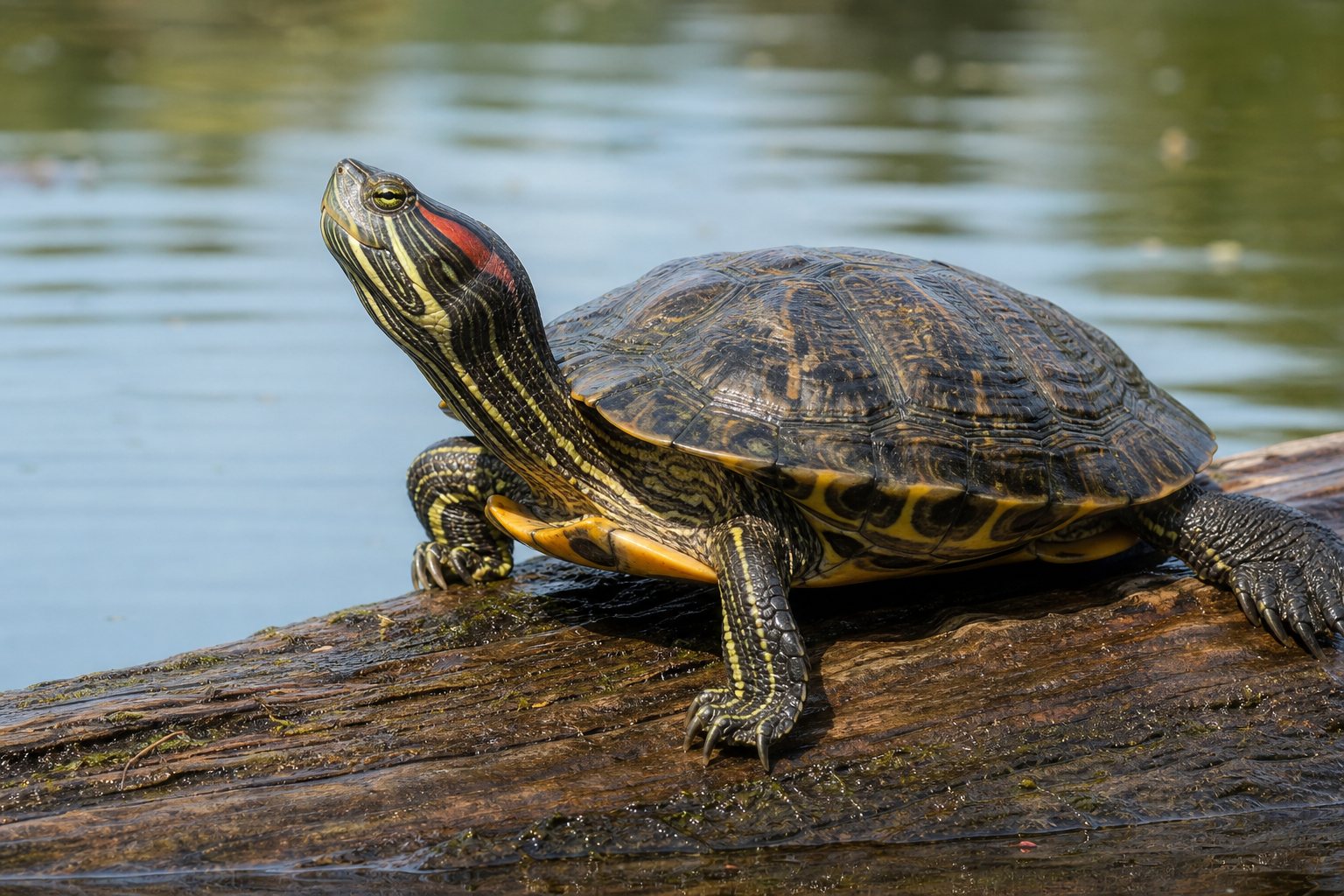
An aquatic turtle is not a fish, but it lives in water and produces a substantial organic waste load. As it grows, smells and maintenance can become much more demanding.

Finding a turtle
Do not release it elsewhere
If you find a turtle, record the location and its condition, avoid unnecessary handling and ask for advice. Moving it without good reason can do more harm than good.
Before taking in a turtle
Do not decide in the shop
If the idea comes to you while looking at a small animal in a tank, pause. First learn about its species, adult size, legal requirements and costs.
Ask for the scientific name
‘Aquatic turtle’ is not enough. Species determines care, size, diet and possible legal obligations.
Prepare the habitat first
The animal should not arrive while you are still looking for a filter, lamps, a basking area and information.
Consider its lifespan
This is not a commitment of a few months. It may be with you for many years, with changing needs as it grows.
Think about smells too
An aquatic turtle is not a fish, but it lives in water and produces a substantial organic waste load. When it is small, the impact may seem minimal; as it grows, smells and maintenance can become much more noticeable.
Be honest with yourself
If the thought of living with filters, cleaning, water and possible smells for years already feels burdensome, do not buy an aquatic turtle. Deciding against it now is better than abandoning it later.
If a turtle already lives with you
- Watch the water: if it quickly becomes cloudy, the filter or care routine is often inadequate.
- Check that the basking area is genuinely dry and easy to reach.
- Do not express affection through feeding: too much food, or the wrong food, can cause harm.
- Record when UVB lamps need replacing: they may still look lit even when they are no longer effective.
- Photograph the animal periodically: growth, shell, eyes and behaviour can tell you a great deal.
Do not be misled by appearances
A turtle that eats is not necessarily healthy. A tank that looks clean in a photograph does not necessarily have stable conditions. A small animal is not necessarily easy to keep. A species sold online is not necessarily right for you. Responsible care begins when we stop looking for quick reassurance and start asking better questions.
Smells are part of everyday reality too. With a well-designed, filtered and maintained habitat, they are much more manageable; in a small enclosure, with a weak filter or an animal whose housing does not keep pace with its growth, water can deteriorate quickly. This is not just a household inconvenience: it indicates the animal’s welfare and whether the commitment is sustainable.
When to ask for help
Legal questions
Before transferring, buying or moving an animal, check the legislation and documentation.
Read about legislationQuestions about the environment
If you are unsure whether the enclosure is suitable, return to natural functions and the needs of the species.
Go to habitatsHealth concerns
Swollen eyes, lethargy, abnormal buoyancy and a soft shell deserve attention.
Read about healthIf you can no longer care for it
The responsible choice is neither releasing it into the wild nor handing it to the first person you find online. A proper process is needed: species identification, legal checks, health assessment and a suitable destination.
The Guardians of the Earth Foundation is working to establish ethical sanctuaries: non-commercial places of care for animals that cannot be reintroduced and need lasting protection. Supporting the project also helps build practical alternatives to abandonment.
A guardian’s tip
Do not wait until you have ‘a problem’ to make improvements. Prevention is kinder than treatment: the right lamp, a suitable filter, a better diet or a legal check today can prevent suffering tomorrow.
Do you have a well-documented tip, a useful photograph or an experience that could help others? You can send it to the editorial team: suggest a contribution.
If you are a vet, biologist, teacher, researcher or other professional and would like to author an authoritative contribution about a species or a health, legal or educational topic, the Foundation can consider publishing it with your name and professional profile.
If these tips have helped you, you can help the project grow: become a Guardian or support the Foundation.
Editorial note
Disclaimer: This guide is for information only and does not replace advice from a vet experienced in reptiles, the relevant authorities or a legal adviser where necessary.