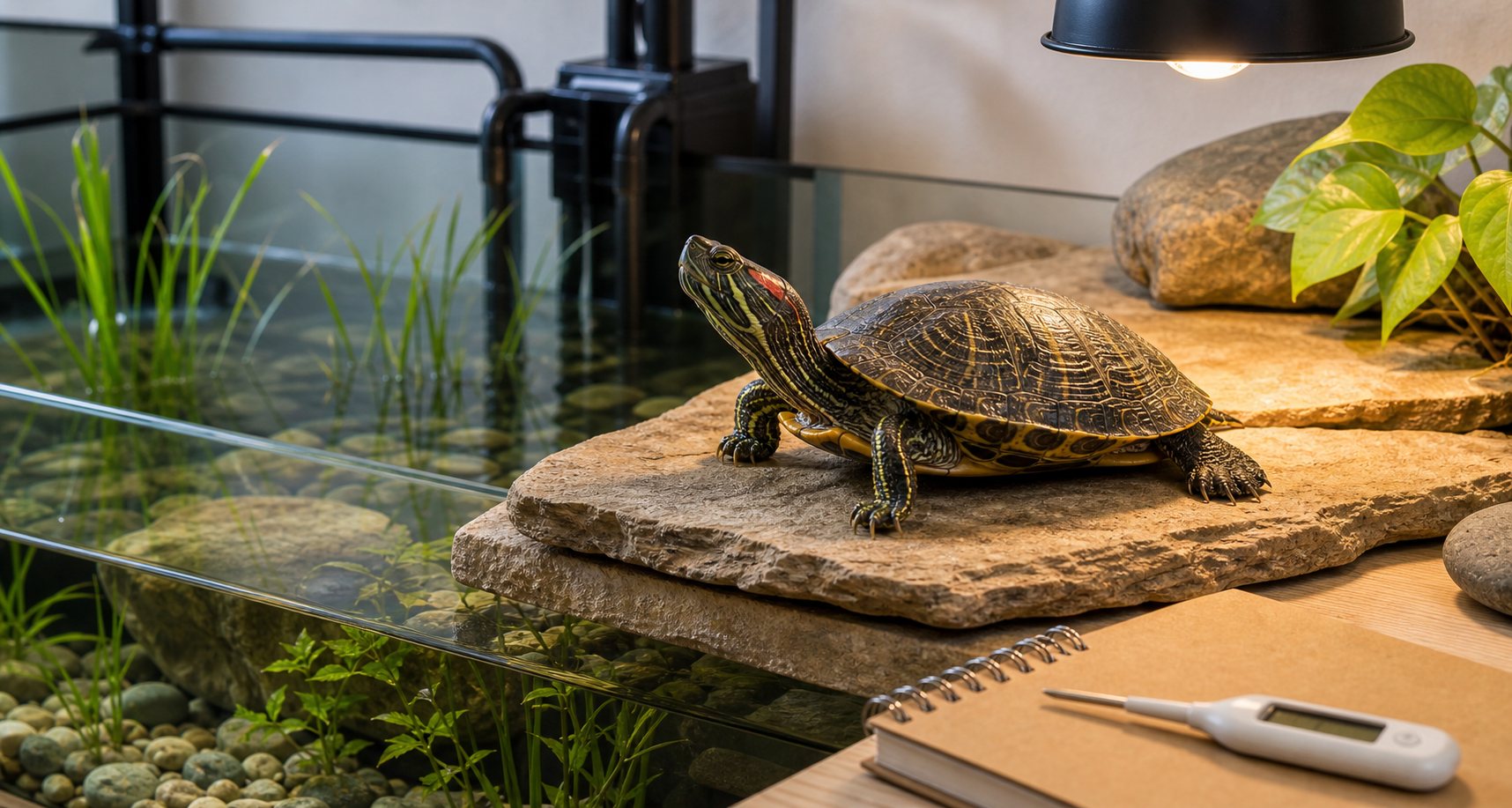
This page does not replace a veterinary examination. It helps you recognise signs, prevent mistakes and prepare useful information for a vet experienced in reptiles.
The essential answer
What does a healthy aquatic turtle look like?
A turtle in good condition behaves in ways consistent with its species and the season: it responds to its surroundings, swims or moves with control, breathes without obvious effort, has open, clean eyes, uses the different parts of its habitat and maintains weight and shell condition consistent with growth over time.
There is no single model of ‘normal’, however. A Sternotherus may use the bottom and shelters differently from a basking Trachemys . To recognise a change, you need to know the species and establish the individual animal’s baseline: what it usually does, how much it weighs, how it eats and how it uses its habitat.
Behaviour
Activity, responses to stimuli and use of water, shelters and the basking area should be consistent, without sudden unexplained changes.
Breathing
At rest, there should be no open-mouth breathing, noises, discharge or obvious effort. Abnormal breathing needs prompt attention.
Eyes and skin
Clean eyes, skin without obvious injuries and no swelling are useful reference points. Shedding and mineral deposits should not automatically be mistaken for disease.
Shell and weight
Observe the carapace and plastron over time. Unusual odour, soft areas, lesions or unexplained weight changes need assessment.
Keeping an aquatic turtle healthy
Prevention is almost always rooted in the environment. Clean water, the right temperature, a dry basking area, UVB exposure, a species-appropriate diet and reduced stress are the foundations. If one is missing, symptoms may develop slowly and only become obvious when the problem is already advanced.
Observation
Observe appetite, swimming, basking, eyes, breathing and posture regularly.
Environment
Many problems arise from dirty water, cold conditions, lack of UVB or an unsuitable basking area.
Diet
A monotonous or excessively high-protein diet can affect growth, shell health and metabolism.
Vet
Find an experienced vet before an emergency, not when the animal is getting worse.
Triage: when not to wait
Turtles can conceal illness for a long time. Once a symptom becomes obvious, there may be little room to wait. In these situations, promptly contact a vet experienced in reptiles, explaining the species, size, symptoms and environmental conditions.
Abnormal breathing
An open mouth, breathing noises, mucus, an extended neck, difficulty breathing or tilted floating require prompt attention.
Trauma and injuries
Bites, fractures, bleeding, shell damage, falls or attacks should not be managed with improvised treatment.
Marked weakness
Severe lethargy, inability to submerge, lack of response to stimuli or persistent loss of appetite are important warning signs.
Eyes and swelling
Closed or swollen eyes, lumps near the ear, oedema or sudden swelling need assessment, as there may be several possible causes.
Environmental history: the questions a vet will want to ask
In reptile medicine, the environment is part of the diagnosis. Before considering medication, a professional will want to understand how the animal lives. Being prepared makes the appointment more useful and reduces the risk of vague answers.
- The identified species, or photographs that can help identify it.
- Estimated age, weight, carapace length and growth history.
- Water, basking-area and room temperatures measured with reliable instruments.
- UVB lamp type, distance from the animal, any glass or plastic barriers in between and replacement date.
- Actual diet over the past few days, supplements used, appetite and recent changes.
- Filter, frequency of water changes, other animals sharing the enclosure and possible sources of stress.
Many similar symptoms have different causes. It is therefore not responsible to diagnose from a photograph or recommend antibiotics, vitamins, eye drops or invasive treatments without an examination.
A sick aquatic turtle: signs not to ignore
Turtles often show distress late. If a symptom is obvious, do not spend days searching online for remedies.
Swollen eyes
May be linked to irritation, infection, deficiencies or an unsuitable environment. Assessment is needed, not randomly chosen eye drops.
Lethargy
If it remains motionless, does not eat or seems weak, check temperature and environment and consider a veterinary appointment.
Floating at an angle
May be a sign of a respiratory or other disorder. If it persists, treat it as urgent.
A soft or altered shell
May indicate problems with growth, calcium, UVB or diet, or an infection. Do not wait for it to get worse.
Guided observation
Read the signs by body system, without turning them into diagnoses
The same sign can have very different causes. A responsible guide helps you describe it accurately and understand the urgency, but does not diagnose a disease from a photograph. This table helps you gather useful information for the vet.
| Area observed | What to describe | Signs needing attention | Responsible next step |
|---|---|---|---|
| Breathing and position in the water | Rate, noises, neck position, ability to submerge and whether it floats level. | Open-mouth breathing, mucus, effort, loss of control or persistent tilting. | Contact the vet promptly and report temperatures and how long symptoms have lasted. |
| Eyes, nostrils and mouth | Whether the eyes open, discharge, swelling, plaques or difficulty grasping food. | Closed or very swollen eyes, discharge, blood, lumps or inability to feed. | Do not apply eye drops, vitamins or disinfectants without a prescription. |
| Carapace, plastron and skin | Texture, odour, colour, raised areas, wounds, abrasions and changes over time. | Deep lesions, foul odour, soft tissue, bleeding or trauma. | Separate the animal from possible aggressors and seek veterinary advice without scraping or cutting. |
| Appetite and digestive system | What and how much it actually eats, droppings, regurgitation, weight and dietary changes. | Persistent loss of appetite accompanied by lethargy, weight loss, regurgitation or markedly abnormal droppings. | Prepare a feeding diary and, if requested, a fresh sample following the vet’s instructions. |
| Movement and neurological signs | Limb strength, coordination, posture, response to stimuli and ability to right itself. | Marked weakness, tremors, asymmetric movements, paralysis or lack of response. | Reduce the risks of drowning and falls, and seek urgent professional help. |
Common problems: what to watch for and what to do
Respiratory problems
Noisy breathing, mucus, an open mouth, lethargy or abnormal buoyancy require prompt attention. Check temperature and draughts immediately, but do not attempt do-it-yourself treatment: an experienced vet is needed.
Shell infections or injuries
Soft patches, foul odour, erosion, wounds or areas that change colour need assessment. Damp conditions, dirty water, trauma or deficiencies often make matters worse.
Nutritional deficiencies and vitamin A
Swollen eyes, changes to mucous membranes and weakness can have many causes, including deficiencies. Random supplementation is not the answer: diet, UVB, temperature and a veterinary examination are all part of the same picture.
Metabolic bone disease and uneven growth
A soft shell, deformities, pyramiding, weakness or difficulty moving may be linked to diet, calcium, UVB, temperature and overall care. Correcting the environment is essential, but an animal already showing symptoms needs professional assessment.
Ear abscesses and swelling at the sides of the head
Swelling behind the eye or near the eardrum may indicate a problem that requires veterinary expertise in chelonians. It must not be punctured, squeezed or treated at home.
Parasites and gastrointestinal disorders
Weight loss, abnormal droppings, loss of appetite, regurgitation or poor growth can have many causes, including parasites. A faecal examination and clinical assessment may be needed, especially for new or debilitated animals or those with an uncertain history.
Wounds and bites
Forced cohabitation can cause serious injuries. If there are wounds, separate the animals safely and seek veterinary advice.
Quarantine, cohabitation and preventing infection
Immediately introducing a new animal to others is one of the riskiest choices. Even an apparently healthy turtle can carry parasites or infections, or experience stress while adapting. Quarantine in a separate environment, with dedicated equipment and regular observation, is a precaution, not needless suspicion.
Assess cohabitation carefully: differences in size, sex, species, strength and temperament can lead to competition, bites, chronic stress and inability to feed. If an animal is chased, bitten or cannot reach the basking area, the arrangement is not working.
What to prepare before an appointment
- Photographs of the tank or complete habitat.
- Water and basking-area temperatures.
- Type and age of UVB and basking lamps.
- Diet over the past few days.
- Photographs of the carapace, plastron, eyes and head.
- How long the symptom has lasted and whether it is getting worse.
A website can help you recognise a problem, but it cannot examine the animal. For persistent symptoms, injuries, breathing difficulties or rapid deterioration, seek a vet experienced in reptiles.
A health diary
For long-lived animals, a simple diary is valuable: weight, monthly photographs, lamp replacements, dietary changes, episodes of reduced appetite, abnormal shedding, prescribed treatments and appointments. You do not need to be obsessive; you need a record. When something changes, the information helps show whether it is a one-off event or a trend.
Sources and further reading
The following sources provide a general veterinary overview. Consulting them does not replace a clinical examination, and protocols may vary by species and individual case.
Frequently asked questions
When should I take my turtle to the vet?
When there are persistent symptoms, injuries, breathing difficulties, lethargy, swollen eyes or loss of appetite.
Are swollen or closed eyes a serious sign?
Yes. They can have different causes and need veterinary assessment, not improvised remedies.
Why is my turtle floating at an angle?
It may indicate respiratory problems, weakness or other conditions: it should be assessed promptly by an expert.
Does prevention depend on the environment?
Very much so. Water, temperature, UVB, a basking area and diet are everyday preventive care.
Check habitat, lighting and diet first
Many signs arise from environmental mistakes. Correcting them does not replace an examination, but helps prevent recurrence.
Review the habitatEditorial note
Health disclaimer: This page does not replace a veterinary examination. If there are symptoms, injuries, breathing difficulties, lethargy, swollen eyes, abnormal buoyancy or loss of appetite, contact a vet experienced in reptiles.